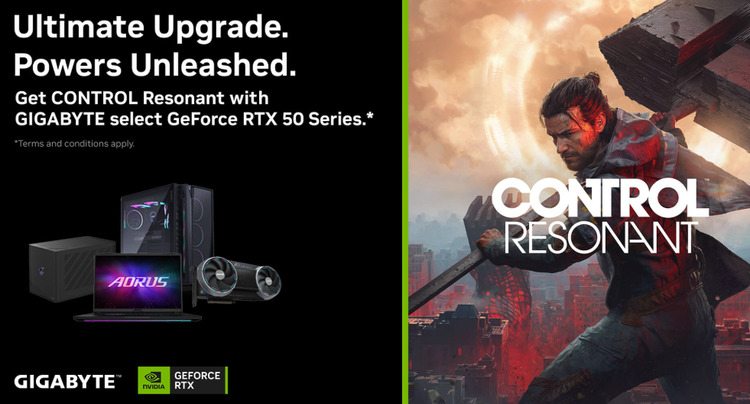
GIGABYTE has announced an exciting collaboration with NVIDIA, offering the highly anticipated CONTROL Resonant game bundle with…
MSI IPC Introduces MS-C9ZA Fanless Edge AI Box PC With NVIDIA Jetson Orin Nano
Last Updated on
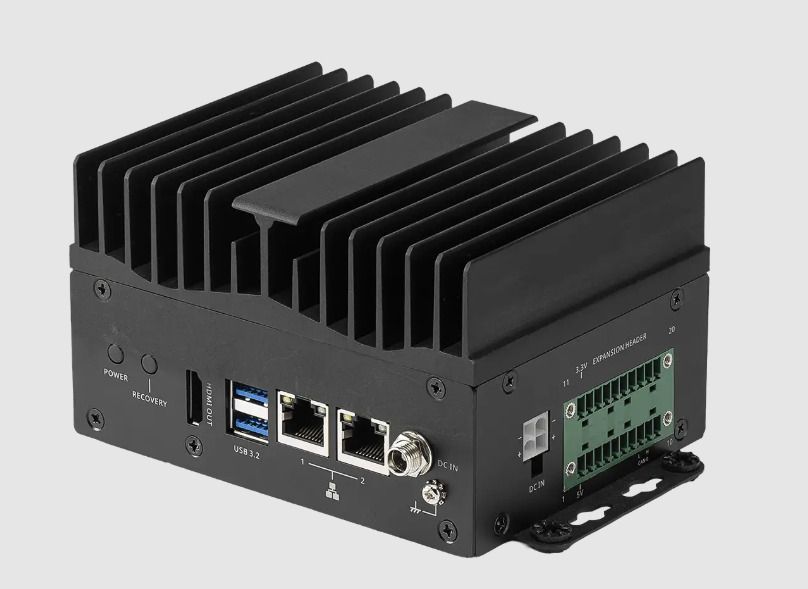
MSI IPC has introduced the MS-C9ZA, a compact fanless Edge AI Box PC designed for applications including machine vision, robotics, intelligent video analysis, and industrial edge computing. The system is built around the NVIDIA Jetson Orin Nano 8GB platform and combines local AI processing with industrial connectivity and expansion options in a small form factor.
The MS-C9ZA is designed to bring AI inference closer to where data is generated. Instead of sending camera feeds, sensor data, and other information to remote cloud servers for processing, the system can perform AI workloads locally. This approach can help reduce network traffic, cloud dependency, and latency in applications where rapid response times are important.
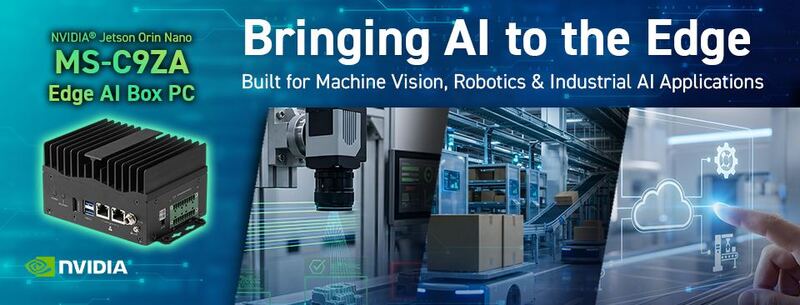
At the heart of the system is a 6-core Arm Cortex-A78AE CPU, an NVIDIA Ampere GPU, and 8GB of LPDDR5 memory. Together, these components provide the computing resources required for a range of edge AI and computer vision workloads.
The Jetson Orin Nano platform can also be used for selected generative AI and Vision AI applications, including smaller language models, quantized large language models, vision-language models, and vision transformers. However, the models that can be deployed and their resulting performance will depend on factors such as model size, quantization, memory requirements, software frameworks, and system configuration.
MSI MS-C9ZA at a Glance
- AI Platform: NVIDIA Jetson Orin Nano 8GB
- CPU: 6-core Arm Cortex-A78AE
- GPU: NVIDIA Ampere architecture
- Memory: 8GB LPDDR5
- Design: Compact fanless Edge AI Box PC
- Operating Temperature: -25°C to 60°C
- Power Input: 12–24V DC
- Primary Applications: Robotics, machine vision, Vision AI, industrial edge computing
Compact Fanless Design for Edge Deployments
One of the defining characteristics of the MS-C9ZA is its compact, fanless enclosure. Measuring 126 × 96 × 74 mm, the system is designed for deployments where installation space is limited and conventional desktop-style computers may not be practical.
The fanless design eliminates the need for mechanical cooling fans, which can be useful in industrial environments where dust, vibration, noise, or long-term reliability are considerations. The system is also designed to operate across a temperature range of -25°C to 60°C, allowing it to be deployed in a variety of industrial and edge computing environments.
For installation flexibility, the MS-C9ZA supports DIN-rail mounting, making it suitable for integration into industrial control cabinets and other equipment commonly used in manufacturing and automation environments.
NVIDIA Jetson Orin Nano for Local AI Processing
The MS-C9ZA uses the NVIDIA Jetson Orin Nano 8GB platform as its primary AI computing engine. Its combination of Arm CPU processing and NVIDIA Ampere GPU acceleration allows the system to handle AI inference and computer vision workloads directly at the edge.
Local processing can be particularly useful for applications that need to analyze data as it is generated. For example, a machine vision system can process images from an industrial camera locally rather than continuously transferring image data to a remote server.
This architecture can help reduce latency and bandwidth requirements while allowing AI-enabled systems to continue processing information without relying entirely on a cloud connection.
The platform can also be configured for selected Vision AI and generative AI workloads. Potential applications include object detection and classification, visual inspection, intelligent video analytics, and certain smaller or optimized AI models.
Actual performance, however, will vary depending on the workload. Model size, quantization, available memory, inference framework, optimization, and software configuration can all affect the number of models that can be deployed and their performance.
Industrial Connectivity and I/O
Beyond its AI computing capabilities, the MS-C9ZA is designed to connect with cameras, sensors, controllers, and other industrial equipment.
The system provides dual Gigabit Ethernet, along with USB connectivity and a range of industrial interfaces including I2C, UART, and CAN. It also includes 1.3 kV isolated GPIO, providing an additional option for interfacing with external industrial equipment.
This combination of interfaces allows the MS-C9ZA to serve as a local computing and control platform within larger automation and edge AI systems.
The system’s 12–24V DC input further supports integration into industrial power environments, where this voltage range is commonly used by control systems and other equipment.
M.2 Expansion and Security
The MS-C9ZA also provides M.2 expansion, allowing the system to support NVMe storage and other compatible expansion hardware.
Additional storage can be useful for edge AI deployments that need to retain locally generated data, application files, AI models, logs, or video recordings. Keeping data locally can also reduce the need to continuously transfer large amounts of information over a network.
For hardware-level security, MSI IPC includes TPM 2.0 support. A Trusted Platform Module can provide hardware-based security functions such as cryptographic key storage and platform integrity features, depending on how the system and operating environment are configured.
Designed for Robotics
Robotics is one of the key application areas for the MS-C9ZA. The combination of GPU-accelerated AI processing, compact dimensions, industrial connectivity, and local inference makes the system suitable for a range of robotic applications.
Potential uses include autonomous mobile robots (AMRs), robotic vision, object recognition, and obstacle detection. Local AI processing can be particularly important for robots that need to interpret camera and sensor information with low latency.
Instead of depending exclusively on a remote server, a robot can perform supported AI inference directly on its onboard computing hardware. This can simplify certain system architectures and reduce the amount of data that needs to travel across a network.
Machine Vision and Vision AI
Machine vision is another major target for the MS-C9ZA.
The system can be used as an edge computing platform for applications such as object detection, barcode recognition, automated defect inspection, assembly verification, and robotic guidance.
In manufacturing environments, cameras can generate large volumes of image data. Processing that information locally can make it possible to identify defects or classify objects close to the production line, while sending only selected results or events to higher-level systems.
The same approach can be applied to intelligent video analytics, where AI models analyze camera feeds to identify objects, count people, classify activity, or monitor equipment.
Industrial Edge AI and Smart Manufacturing
The MS-C9ZA is also aimed at broader industrial edge computing applications. It can process information gathered from cameras, sensors, and other industrial devices and perform AI-based analysis closer to the source.
This can be useful in smart manufacturing environments where data needs to be analyzed in real time or near real time. Depending on the software and system architecture, processed information can then be passed to factory management platforms, monitoring systems, or cloud services.
By moving selected workloads to the edge, organizations can reduce the amount of raw data that must be transmitted to remote infrastructure while retaining the option of connecting local AI systems to broader cloud or enterprise platforms.
Intelligent Video and Autonomous Systems
The compact AI computer can also be deployed in intelligent video and autonomous systems. Potential workloads include people counting, object classification, traffic analysis, equipment monitoring, and other computer vision applications.
Local inference can be valuable in these scenarios because video streams can generate substantial amounts of data. Processing them at the edge can reduce network requirements and allow supported AI-based decisions to be made closer to the cameras and sensors generating the data.
As with other AI applications, the actual capabilities will depend on the models, software stack, cameras, sensors, and workload being deployed.
MS-C9ZA Brings AI Computing to the Edge
With the MS-C9ZA, MSI IPC combines the NVIDIA Jetson Orin Nano 8GB platform with a compact fanless chassis, industrial I/O, M.2 expansion, flexible DC power input, and DIN-rail mounting.
The system is designed for organizations looking to deploy AI processing closer to cameras, sensors, robots, and industrial equipment. Its combination of local GPU-accelerated computing and industrial connectivity makes it suitable for applications ranging from machine vision and robotics to intelligent video analytics and smart manufacturing.
By performing supported AI workloads locally, the MS-C9ZA can help reduce reliance on cloud processing, limit network bandwidth requirements, and lower latency for applications that require rapid access to analyzed data.
Related Posts