Tag: Amplifier

  • Marantz PM6007 Amplifier Comprehensive Review

    Marantz PM6007 Amplifier Comprehensive Review

    The Marantz PM6007 is the latest iteration of the long-running and highly regarded PM series from Marantz, a brand renowned for producing high-fidelity audio components. Priced at $699, this integrated stereo amplifier is positioned as an entry-level high-performance amplifier, ideal for audiophiles seeking both analog and digital versatility in a compact form. With a clean design, quality components, and enhancements over its predecessor (the PM6006), the PM6007 is a strong contender in its category. This review dives deep into its features, sound quality, usability, and value proposition.

    Design and Build Quality

    The Marantz PM6007 sports a minimalist yet elegant design, staying true to Marantz’s aesthetic heritage. It features a solid aluminum front panel, with neatly arranged buttons and knobs that contribute to its premium look. The build quality is sturdy, with a substantial weight that reflects the quality of internal components. Despite its relatively small size, the unit feels dense and well-constructed, with a layout that is both practical and user-friendly.

    • Dimensions: The unit’s footprint (17.3 x 14.1 x 4.1 inches) makes it a space-friendly addition to most audio setups.
    • Weight: At 17.6 pounds, it’s portable enough for easy placement, yet heavy enough to suggest robust internal engineering.

    The front panel is intuitive, with knobs for volume, bass, treble, balance, and input selection. The back panel is where the action really happens, housing a variety of analog and digital inputs. The layout is clean, and ports are well-labeled, making the process of connecting multiple devices hassle-free.

    Marantz PM6007
    Marantz PM6007

    Audio Features and Specifications

    2.1. Amplification and Power Output

    The PM6007 uses Current Feedback Topology, a characteristic feature in Marantz amplifiers, which ensures high-speed, detailed sound reproduction. Its output power is rated at:

    • 45 watts per channel into 8 ohms
    • 60 watts per channel into 4 ohms

    This power output is modest compared to some high-end amplifiers, but it is more than sufficient for most small to mid-sized rooms. The damping factor of 100 indicates that the amplifier has good control over speaker movements, ensuring tight and accurate bass.

    • Total Harmonic Distortion (THD): 0.08%, which is commendable, as this low distortion level translates into clear, undistorted sound.
    • Frequency Response: 10 Hz to 70 kHz, far beyond the typical human hearing range, implying that this amplifier is capable of handling a wide range of frequencies, offering crisp highs and rich lows.

    Analog and Digital Connectivity

    One of the PM6007’s key strengths is its versatility in connectivity. It offers five audio inputs and a range of digital options:

    • Analog Inputs: Five audio inputs, including a dedicated MM (Moving Magnet) phono input for turntables. The phono stage is based on the technology used in the higher-end PM700N model, resulting in lower distortion and noise, which vinyl enthusiasts will appreciate.
    • Digital Inputs:
      • Two optical and one coaxial input support a 192 kHz/24-bit sample rate, enabling high-resolution audio playback. This makes the PM6007 a great choice for connecting CD players, streamers, and TVs.
      • New AK4490 DAC (Digital to Analog Converter): The PM6007 uses this advanced DAC to improve sound quality, offering high-resolution compatibility for enhanced digital performance.

    Digital Filters

    Marantz has introduced two new digital filters, which are unique to the PM6007. These filters allow the user to adjust how digital signals are processed, tuning the sound based on personal preferences:

    • Filter 1: Prioritizes precision, delivering tight, controlled sound.
    • Filter 2: Focuses on depth, producing a warmer and more immersive soundstage.

    This feature is particularly beneficial for those who listen to different types of digital media and want to tailor their listening experience based on the source.

    Subwoofer Output

    The inclusion of a dedicated subwoofer output is a welcome addition. This feature allows users to connect an active subwoofer for deeper bass response, making the PM6007 suitable for home theater setups or audiophiles who desire more low-end punch. Additionally, the amplifier supports two sets of speaker outputs, which can be controlled individually, enabling multi-room audio or speaker bi-wiring.

    Performance and Sound Quality

    General Sound Profile

    • Bass: The PM6007’s bass performance is noteworthy. Despite its relatively modest power output, the bass is punchy and well-controlled. The amplifier’s damping factor helps prevent the bass from becoming boomy or uncontrolled, especially when paired with a subwoofer.
    • Midrange: The midrange is where the PM6007 truly excels. Vocals and instruments are rendered with exceptional clarity and detail. Whether it’s the warmth of a guitar or the intimacy of a vocal performance, the amplifier brings out the subtle nuances in the music.
    • Highs: The treble is crisp but never fatiguing. The PM6007 does a good job of handling high frequencies without introducing harshness or sibilance, ensuring long listening sessions remain enjoyable.

    Phono Stage Performance

    Vinyl enthusiasts will appreciate the improved phono pre-amp on the PM6007, which is derived from the PM700N. The noise floor is impressively low, providing a clean, uncolored sound. The phono stage enhances the natural warmth of vinyl, delivering an open, detailed sound that lets the richness of the analog medium shine through.

    Digital Performance

    Thanks to the AK4490 DAC, digital playback on the PM6007 is excellent. The DAC is capable of decoding high-resolution audio files, and the digital filters provide added flexibility for fine-tuning the sound. Whether you’re streaming music, playing CDs, or watching movies, the digital inputs deliver crisp, dynamic audio with little distortion or noise.

    Marantz PM6007
    Marantz PM6007 images

    Performance with Various Speakers

    The PM6007 pairs well with a variety of speakers. It can drive both 8-ohm and 4-ohm speakers effectively, making it versatile enough to handle different setups. However, it performs best with speakers that have relatively high sensitivity, as this helps compensate for the amplifier’s moderate power output. The amplifier’s tonal balance remains consistent across different speaker types, and it handles both small bookshelf speakers and larger floor-standing models with ease.

    User Experience and Practicality

    The Marantz PM6007 is designed with user convenience in mind. The front panel controls are responsive and intuitive, and the remote control offers easy access to all major functions, including input selection and volume control.

    Setup Process

    Setting up the PM6007 is straightforward, whether you’re an audio enthusiast or a beginner. The back panel is clearly labeled, making it easy to connect all your devices, including turntables, CD players, streamers, and TVs. The inclusion of multiple inputs means that you can create a highly versatile system without needing additional components.

    Versatile Inputs and Outputs

    • Analog and Digital Sources: With five analog audio inputs, including a phono input, and three digital inputs (two optical and one coaxial), the PM6007 can accommodate a variety of devices. Whether you’re playing vinyl, streaming music, or watching movies, this amplifier can handle it all.
    • Subwoofer Output: The addition of a dedicated subwoofer output is a game-changer for users who want to enhance their system’s bass response. This feature, combined with the ability to drive two separate sets of speakers, makes the PM6007 ideal for multi-room audio setups.

    Comparisons with Competitors

    At its price point, the PM6007 faces stiff competition from brands like Yamaha, Cambridge Audio, and NAD. However, it stands out due to its well-rounded feature set and sound quality.

    • Yamaha A-S501: Priced similarly, the Yamaha A-S501 offers more power (85W per channel) but lacks the warmth and midrange detail that Marantz is known for. The Marantz PM6007 is better suited for those who prioritize detail and musicality over sheer power.
    • Cambridge Audio CXA61: The Cambridge Audio CXA61 offers similar digital features, including a high-quality DAC. However, the CXA61 is priced higher, making the Marantz PM6007 a more budget-friendly option with comparable sound quality.

    Is the Marantz PM6007 Worth It?

    The Marantz PM6007 is an outstanding choice for audiophiles looking for a well-balanced, high-performance amplifier under $700. Its combination of analog and digital versatility, excellent phono stage, and warm, detailed sound signature make it a compelling option for both vinyl enthusiasts and digital audio users alike.

    • Pros:
      • Superb sound quality with a warm, natural tone.
      • Versatile digital and analog connectivity.
      • Dedicated subwoofer output.
      • High-quality DAC with digital filters for customization.
    • Cons:
      • Modest power output (may struggle with large or inefficient speakers).
      • No USB or wireless connectivity (which some modern users might expect).

    For those seeking a balance between affordability and high-quality performance, the Marantz PM6007 offers excellent value and a sound that is sure to please even discerning listeners. Whether you’re into vinyl, streaming, or home theater, the PM6007 is a versatile and highly capable amplifier for your audio setup.

  • Cyrus Power-XR Amplifier – Review

    Cyrus Power-XR Amplifier – Review

    This comprehensive guide will take you through every facet of the Cyrus Power-XR, from unboxing to performance analysis, providing a detailed understanding of its features, functionality, and overall value.

    Unboxing and First Impressions

    Packaging and Presentation

    The Cyrus Power-XR Amplifier arrives in a sturdy, well-designed box that reflects the premium nature of the product. Upon opening, I was greeted with a meticulously organized package. The amplifier is securely nestled within foam padding, ensuring it arrives in pristine condition. Alongside the unit, the box includes a power cable, a user manual, and a remote control.

    Cyrus Power-XR Amplifier
    Cyrus Power-XR Amplifier

    Build Quality and Design

    The first thing that struck me about the Cyrus Power-XR is its build quality. The chassis is constructed from high-grade aluminum, giving it a robust and durable feel. The sleek, minimalist design with a matte finish exudes sophistication, making it a perfect addition to any modern audio setup. The front panel features a simple yet elegant display, with essential controls for easy operation.

    Technical Specifications

    Understanding the technical specifications of an amplifier is crucial in gauging its potential performance. Here’s a breakdown of what the Cyrus Power-XR brings to the table:

    • Power Output: 2 x 150W into 6 Ohms
    • Frequency Response: 0.1Hz to 75kHz (-3dB)
    • Total Harmonic Distortion: <0.005% (1kHz, 100W)
    • Signal-to-Noise Ratio: 110dB
    • Inputs: 1 x RCA, 1 x XLR
    • Outputs: 2 x Speaker terminals, 1 x Pre-out
    • Dimensions: 73mm (H) x 215mm (W) x 360mm (D)
    • Weight: 7.7kg

    These specifications highlight the amplifier’s capability to deliver high power with minimal distortion, promising a clear and robust audio performance.

    Setup and Installation

    Connecting the Amplifier

    Setting up the Cyrus Power-XR was a straightforward process. I connected the power cable to the amplifier and plugged it into a wall outlet. Next, I linked my audio source using the RCA inputs and connected my speakers to the speaker terminals. The connections are intuitively labeled, making it easy even for those who may not be tech-savvy.

    Initial Power-Up

    Upon powering up the amplifier, the display lights up, indicating that it’s ready for use. The user manual provides clear instructions on navigating through the initial setup, which includes selecting the input source and adjusting the volume. The remote control is responsive and provides additional convenience for making adjustments from a distance.

    Sound Quality and Performance

    First Listening Impressions

    The true test of any amplifier is its sound quality. From the moment I started playing my first track, I was impressed by the Cyrus Power-XR’s performance. The sound is rich and full, with a remarkable clarity that brings out the nuances in the music. The bass is deep and powerful without overwhelming the mids and highs, which are crisp and detailed.

    Detailed Performance Analysis

    • Bass Response: The amplifier delivers a tight and controlled bass response. Whether I was listening to electronic music with heavy bass lines or a classical piece with a subtle bass undertone, the Power-XR handled it with ease, providing a solid foundation to the music.
    • Midrange Clarity: The midrange is where the Cyrus Power-XR truly shines. Vocals are rendered with an impressive level of detail, making them sound lifelike and engaging. Instruments such as guitars and pianos have a natural timbre, adding to the overall realism of the sound.
    • High-Frequency Reproduction: The high frequencies are crisp and well-defined. There’s a sense of airiness and openness that adds to the immersive listening experience. Cymbals and hi-hats in particular have a shimmering quality that enhances the overall sonic picture.
    • Soundstage and Imaging: One of the standout features of the Cyrus Power-XR is its ability to create a wide and deep soundstage. The positioning of instruments and vocals is precise, giving a three-dimensional feel to the music. This makes it easier to pinpoint the location of each element in the mix, adding to the overall enjoyment.

    Features and Functionality

    User Interface and Controls

    The user interface of the Cyrus Power-XR is straightforward and user-friendly. The front panel houses a few essential buttons and a rotary knob for volume control. The display is clear and easy to read, providing information about the selected input source and volume level. The remote control is ergonomically designed and provides access to all the amplifier’s functions, including power, input selection, and volume adjustment.

    Connectivity Options

    The amplifier offers a good range of connectivity options. The inclusion of both RCA and XLR inputs allows for flexibility in connecting different audio sources. The speaker terminals are of high quality, ensuring a secure connection for optimal audio performance. Additionally, the pre-out option allows for connection to an external power amplifier, providing an upgrade path for those looking to expand their audio system in the future.

    Cyrus Power-XR Amplifier
    Cyrus Power-XR Amplifier – images: Cyrus 

    Advanced Features

    • Thermal Management: The Cyrus Power-XR features an advanced thermal management system that ensures the amplifier operates at an optimal temperature. This not only enhances performance but also extends the lifespan of the unit.
    • Auto Standby: The auto standby feature is a welcome addition, automatically powering down the amplifier when not in use to save energy. It can be easily reactivated via the remote control or front panel buttons.
    • Upgradeable Firmware: The amplifier supports firmware upgrades, allowing users to keep their unit up-to-date with the latest features and improvements.

    Comparison with Competitors

    Price vs. Performance

    In the realm of high-fidelity audio equipment, the Cyrus Power-XR offers a compelling price-to-performance ratio (£2,995). While it may not be the cheapest option on the market, the quality of sound and build it delivers justifies the investment. When compared to other amplifiers in its price range, the Power-XR stands out for its clarity, power, and overall musicality.

    Notable Competitors

    • Naim NAP 200 DR: The Naim NAP 200 DR is a strong competitor, offering excellent sound quality and build. However, it comes at a higher price point, making the Cyrus Power-XR a more budget-friendly option with comparable performance.
    • Rega Elicit-R: The Rega Elicit-R is another worthy contender, known for its warm sound signature and robust build. While it excels in certain areas, the Power-XR’s superior midrange clarity and soundstage give it an edge.
    • Rotel RB-1582 MkII: The Rotel RB-1582 MkII provides a similar power output but lacks some of the advanced features found in the Cyrus Power-XR. The latter’s thermal management and upgradeable firmware make it a more future-proof choice.

    Pros and Cons

    Pros

    • Exceptional Sound Quality: The Cyrus Power-XR delivers a rich, detailed, and engaging sound, making it a joy to listen to.
    • Solid Build Quality: The high-grade aluminum chassis and minimalist design ensure durability and aesthetic appeal.
    • Advanced Features: Thermal management, auto standby, and upgradeable firmware add to the amplifier’s overall value.
    • User-Friendly Interface: The simple and intuitive user interface makes it easy to set up and operate.

    Cons

    • Price: While offering good value, the Power-XR is still a significant investment.
    • Limited Inputs: The amplifier has a limited number of input options, which may be a drawback for users with multiple audio sources.
    • No Built-In DAC: The absence of a built-in DAC may necessitate an additional purchase for digital audio enthusiasts.

    Home Audio Setup

    For a home audio setup, the Cyrus Power-XR proves to be an excellent choice. Its powerful output and detailed sound make it suitable for a wide range of music genres. Whether you’re hosting a party or enjoying a quiet evening with a classical album, the Power-XR delivers consistently high performance.

    Cyrus Power-XR Amplifier
    Cyrus Power-XR Amplifier

    Audiophile Listening Room

    In an audiophile listening room, where sound quality is paramount, the Cyrus Power-XR excels. Its ability to reveal subtle details and nuances in the music makes it a perfect match for high-resolution audio sources. The wide soundstage and precise imaging enhance the overall listening experience, making it a worthy addition to any high-end audio system.

    Professional Studio Environment

    While primarily designed for home use, the Cyrus Power-XR can also find a place in a professional studio environment. Its accurate sound reproduction and high power output make it a valuable tool for mixing and mastering audio tracks. The robust build ensures it can withstand the demands of a studio setting, providing reliable performance day in and day out.

    Maintenance and Support

    Routine Maintenance

    Maintaining the Cyrus Power-XR is relatively straightforward. Regular dusting and ensuring proper ventilation will help keep the unit in good working condition. The user manual provides detailed instructions on cleaning and care, ensuring users can keep their amplifier looking and performing at its best.

    Customer Support

    Cyrus Audio is known for its excellent customer support. The company offers a comprehensive warranty on the Power-XR, covering parts and labor for a specified period. Additionally, their support team is responsive and knowledgeable, ready to assist with any questions or issues that may arise.

    Cyrus Power-XR Final Verdict

    The Cyrus Power-XR Amplifier is a remarkable piece of audio equipment that delivers on its promises. Its combination of exceptional sound quality, solid build, and advanced features make it a standout choice for audiophiles and casual listeners alike. While it comes with a premium price tag, the value it offers in terms of performance and durability makes it a worthwhile investment.

    In summary, if you’re in the market for an amplifier that can elevate your listening experience to new heights, the Cyrus Power-XR should be at the top of your list. Its impressive sound quality, user-friendly design, and robust build make it a standout performer in the crowded field of high-fidelity audio equipment.

    Appendix: Frequently Asked Questions

    Q: Does the Cyrus Power-XR come with a warranty? A: Yes, Cyrus Audio offers a comprehensive warranty covering parts and labor for a specified period. Check the user manual or the company’s website for detailed warranty information.

    Q: Can I connect multiple audio sources to the Power-XR? A: The amplifier has both RCA and XLR inputs, allowing for connection to multiple audio sources. However, the number of inputs is limited, so users with multiple sources may need to consider an external switcher.

    Q: Is the Cyrus Power-XR suitable for high-resolution audio? A: Absolutely. The amplifier’s wide frequency response and low distortion make it ideal for high-resolution audio playback, revealing subtle details and nuances in the music.

    Q: Can the firmware of the Cyrus Power-XR be upgraded? A: Yes, the amplifier supports firmware upgrades, allowing users to keep their unit up-to-date with the latest features and improvements.

    Q: Does the Cyrus Power-XR have a built-in DAC? A: No, the amplifier does not have a built-in DAC. Users looking to connect digital audio sources will need an external DAC.

    Q: How does the auto standby feature work? A: The auto standby feature automatically powers down the amplifier when it’s not in use for a specified period, saving energy. It can be easily reactivated using the remote control or front panel buttons.

    By following this comprehensive guide, you should have a thorough understanding of the Cyrus Power-XR Amplifier, from its technical specifications to its real-world performance. Whether you’re an audiophile seeking the ultimate listening experience or a casual listener looking for high-quality sound, the Cyrus Power-XR is an amplifier that deserves your consideration.

  • JVC KS-DR2104DBT Amplifier – Features, Installation, and More

    JVC KS-DR2104DBT Amplifier – Features, Installation, and More

    The JVC KS-DR2104DBT amplifier is a compact and rugged 4-channel amp designed for use in cars, boats, and ATVs. With a maximum power output of 600 watts and Bluetooth remote control, this marine-rated amplifier is perfect for adding clarity and impact to your audio system. Learn more about the features and installation process of the KS-DR2104DBT.

     JVC KS-DR2104DBT amplifier
    JVC KS-DR2104DBT amplifier

    The JVC KS-DR2104DBT is a Car, Marine, UTV and Motorcycle audio digital amplifier designed to enhance the sound quality of your car’s audio system. Here are some of its features:

    • Power output: The amplifier can deliver up to 600 watts of peak power across four channels, with a continuous RMS output of 45 watts per channel at 4 ohms.
    • Bluetooth connectivity: You can easily connect your Bluetooth-enabled device to the amplifier and stream audio wirelessly.
    • Digital signal processing: The amplifier features a built-in DSP that can adjust the sound settings to optimize the audio quality based on your preferences and the acoustics of your car.
    • Low-pass filter: The low-pass filter can help to eliminate unwanted high-frequency noise from your audio signal.
    • Compact design: The amplifier is designed to be compact and lightweight, making it easy to install in your car.

    The JVC KS-DR2104DBT is a versatile and powerful amplifier that can significantly improve the sound quality of your Car, Marine, UTV audio system.

    The KS-DR2104DBT amplifier from JVC’s drvn Series is a compact and versatile addition to your vehicle’s audio system. It is suitable for use on both land and water vehicles, and its compact size makes it easy to install in tight spaces. With an output of 50 watts RMS per channel, it provides twice the power of most factory radios or aftermarket marine receivers.

    The KS-DR2104DBT features a robust all-weather chassis that is waterproof, dustproof, salt-spray rustproof, and resistant to damage from excessive vibrations. It is built to withstand tough environments, including power washing. The amplifier comes equipped with Bluetooth connectivity, allowing you to stream music directly from your phone or tablet. It also includes a Bluetooth remote control, which allows you to adjust the volume, EQ, and track selection.  photo: JVC JVC KS-DR2104DBT amplifier

    The KS-DR2104DBT can operate in bridged 2-channel mode to power a pair of high-performance speakers with up to 150 watts RMS each. The amplifier includes separate low- and high-pass filters for the front and rear channels, which enables you to customize the sound for driving full-range, component midrange, or low-frequency speakers.

    KS-DR2104DBT is a high-quality amplifier that delivers excellent sound quality and is built to withstand harsh environments. Its compact size and Bluetooth connectivity make it a great choice for anyone looking to upgrade their vehicle’s audio system.

    The JVC KS-DR2104DBT amplifier has a maximum power output of 600 watts. This power output is divided among the four channels, with each channel capable of delivering up to 250 watts at peak power. However, the continuous RMS power output of the amplifier is 45 watts per channel at 4 ohms. This power output is sufficient to power most aftermarket car speakers and can significantly enhance the sound quality of your car’s audio system. It’s worth noting that the actual power output of the amplifier will depend on several factors, including the impedance of the speakers and the voltage of the power supply.

     JVC KS-DR2104DBT amplifier
    JVC KS-DR2104DBT IP67/IP66 Waterproof & Dustproof

    JVC KS-DR2104DBT amplifier is IP67/IP66 waterproof and dustproof. This means that the amplifier’s chassis is sealed and protected against the ingress of water and dust. The IP67 rating indicates that the amplifier is protected against the effects of immersion in water for up to 30 minutes, while the IP66 rating indicates that the amplifier is protected against water jets from any direction. These ratings ensure that the amplifier is well-suited for use in harsh environments and can withstand exposure to moisture, dust, and other elements. Additionally, the amplifier is also salt-spray rustproof and resistant to damage from excessive vibrations, making it ideal for use in marine and off-road applications.

    KS-DR2104DBT Remote Control
    The JVC KS-DR2104DBT amplifier comes with a remote control that enables you to adjust the volume, EQ, and track selection from a distance. The remote control uses Bluetooth technology to communicate with the amplifier, allowing you to control your music playback from your smartphone or tablet. The remote control is small and easy to use, and it can be mounted in a convenient location in your vehicle for easy access. With the remote control, you can adjust the sound settings on the amplifier without having to reach for the amplifier itself, which can be particularly useful when driving.KS-DR2104DBT Remote ControlJVC KS-DR2104DBT

    JVC KS-DR2104DBT Installation

    The JVC KS-DR2104DBT amplifier is relatively easy to install, but it’s important to follow the manufacturer’s instructions carefully to ensure proper operation and to avoid damaging your vehicle or the amplifier itself. Here are some general steps to follow for installing the KS-DR2104DBT:
    1. Determine the location for the amplifier: The amplifier should be installed in a location where it will be protected from moisture, dust, and excessive vibrations. It’s also important to ensure that there is adequate ventilation to prevent the amplifier from overheating.
    2. Disconnect the battery: Before beginning the installation, disconnect the vehicle’s battery to prevent electrical shorts and other damage.
    3. Connect the power wires: Connect the power wire to the amplifier’s power input, and then connect the other end of the wire to the battery positive terminal. Be sure to fuse the power wire close to the battery terminal.
    4. Connect the ground wire: Connect the ground wire to the amplifier’s ground input, and then connect the other end of the wire to a clean metal surface on the vehicle’s chassis.
    5. Connect the speaker wires: Connect the speaker wires to the amplifier’s speaker outputs, being sure to observe correct polarity.
    6. Connect the signal wires: Connect the signal wires (usually RCA cables) to the amplifier’s input jacks. If your head unit doesn’t have RCA outputs, you may need to use a line output converter.
    7. Mount the amplifier: Mount the amplifier securely in its location, using the supplied mounting screws or brackets.
    8. Reconnect the battery: Reconnect the vehicle’s battery, being sure to observe correct polarity.
    9. Test the system: Turn on the amplifier and the head unit, and test the system to ensure that everything is working properly. Make any necessary adjustments to the sound settings to achieve the desired sound quality.

    These are just general steps, and the specific installation process may vary depending on your vehicle and the equipment you are using. Always refer to the manufacturer’s instructions for detailed guidance on installing your amplifier. If you are unsure about any aspect of the installation, it’s best to consult a professional installer. 

    JVC KS-DR2104DBT Specifications

    Audio unit
    Max Power Output 600W
    Rated Power Output Stereo (4Ω) 50W x 4 (20Hz–20kHz, ≤1.0% THD)
    Stereo (2Ω) 75W x 4 (1kHz, ≤1.0% THD)
    Bridged (4Ω) 150W x 2 (1kHz, ≤1.0% THD)
    Speaker Impedance 4Ω (2Ω to 8Ω allowable)
    (Bridged connection: 4Ω to 8Ω allowable)
    Frequency response (+0, –3dB) 10Hz–20kHz
    Signal to noise ratio 89dB
    Low pass filter frequency (–12dB/oct.) 50Hz–200Hz (variable)
    High pass filter frequency (–12dB/oct.) 50Hz–200Hz (variable)
    Preout 5V (Max)
    Bluetooth
    Version Bluetooth Ver.5.0
    Frequency range 2,402GHz–2,480GHz
    RF output power (E.I.R.P.) +4dBm (Max.), Power Class 2
    Profile A2DP (Advanced Audio Distribution Profile)
    AVRCP (Audio/Video Remote Control Profile)
    General
    Operating voltage 12V DC car battery
    Current consumption 26A
    Operational temperature range –10°C – 60°C
    Dimensions (W × H × D) 7-13/16″ x 1-15/16″ x 4-1/8″
    Weight 1.6kg (3.5lbs)
    Waterproof & Dustproof IP66, IP67
  • Rotel C8+ Class AB Custom Installation Amplifier

    Rotel C8+ Class AB Custom Installation Amplifier

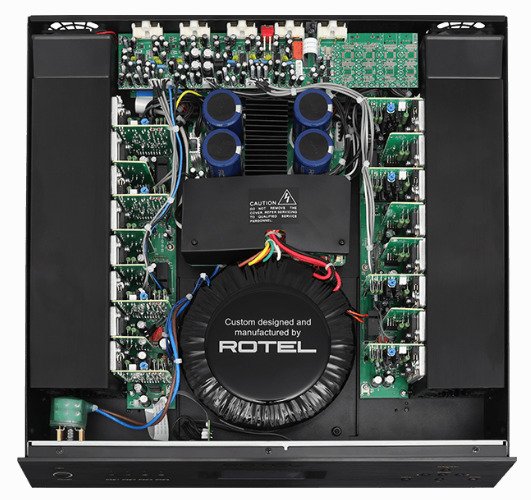
    The powerful C8+ amplifier from Rotel is designed specifically to supply massive amounts of power to specially configured audio systems. Four separate audio output zones and eight channels of pure Class AB amplification are present. Matrixed digital and analog inputs are also available on the C8+ back panel for connecting other sources. Your speakers are in safe hands with this amplifier thanks to its unique design and high-current power supply.

    Rotel C8+
    Rotel C8+ Class AB Custom Installation Amplifier

    Rotel has experience in producing powerful amplifiers. In fact, they create a large portion of their own internal parts and circuitry. For clean, reliable power, the Rotel C8+ uses a specially created, larger toroidal transformer. Bulk storage smoothing capacitors are another component that gives the C8+ precise control over bass frequencies.

    Inside the C8+, Rotel decided to use four high-performance digital-to-analog converter chips from Texas Instruments. When you’re using a digital source, such as a CD player, those processors are in charge of managing the challenging conversion from digital to analog. The maximum resolution supported by each of the amplifier’s two optical and two coaxial digital inputs is 24-bit/192kHz.Rotel C8+This amplifier uses some creative methods to send signal across your house. Its four RCA analog inputs as well as the digital inputs described before are matrixed to all zones. This implies that you can separately allocate the inputs (for instance, assigning digital input A to Zone 1) or have any input play across any zone or zones.

    Even better, you may simultaneously broadcast crucial announcements from your PA system across all zones using the Priority Zone PA Override option. photo: Rotel

    While that may seem like a lot to keep track of, switching between zones and sources is simple thanks to the front panel display. You may identify each input and zone on the C8+’s user-friendly interface to make it easier to remember what’s connected. Additionally, you can change the volume of each zone and the bass and treble settings for each zone separately.

    Rotel C8+ features:
    8-channel multi-zone Class AB amplifier driving all channels at 150 watts per channel into 4 ohms at 0.1% THD and 100 watts per channel into 8 ohms (20-20,000 Hz) (300 watts per channel when bridged)
    oversized toroidal transformer custom-designed for clean power
    four Texas Instruments 24-bit/192kHz digital-to-analog converter chips
    frequency response: 10-100,000 Hz (± 0.5 dB)
    signal-to-noise ratio: 100 dB (102 dB for digital section)
    detachable power cord
    rack-mounting hardware includedRotel C8+

    Connections:
    four pairs of unbalanced stereo RCA inputs
    two optical digital inputs
    two coaxial digital inputs
    all inputs are matrixed across all zones
    one pair of unbalanced stereo RCA line outputs for feeding signal to another amplifier
    3.5mm 12-volt trigger in/out for power control by external components
    RS-232 port allows integration with compatible home automation products
    Ethernet port for network connection, software updates, and integration with home audio products

    Front-panel:
    front-panel display shows selected source, volume level, settings, and more
    menu navigation and setting selection via function buttons on the right-hand side of the front panel
    labeled zone buttons for turning speaker zones on and off
    Rear-panel:
    bridge switches on the rear panel for bridging channels together
    input “A” can be set to stereo or mono by using the rear-panel switch
    when set to “mono”, the left and right signals are combined and each speaker using input A as a source receives a mono signal

  • Aiwa AMU-120BT, high quality 2 x 60 watt Stereo Amp

    Aiwa AMU-120BT, high quality 2 x 60 watt Stereo Amp

    Elegant, feature-packed and highly effective, the Aiwa AMU-120BT amplifier tends to make a genuine heart and soul to your music system.

    With a wide variety of inputs from Bluetooth, USB and SD card digital to MM phono for your deck, this Aiwa AMU-120BT amplifier has you covered. There is also a microphone input for voice-over occasions or karaoke. The strong 2 x 60 watt amplifier provides simple and easy, room-filling sound. Bass sounds, treble and loudness controls let you tune the sound to your precise personal taste or, get the finest sound through the Direct bypass.

    Impressive sound
    The high quality, low distortion FET amp delivers a big 60 watts per channel. This is enough for nearly all places, presenting special event level volumes when important. Bass, treble and loudness controls let you customize the sound, or for the finest sound, just switch to Direct.Aiwa AMU-120BT

    Connect your digital sources – Bluetooth or fixed
    With its Bluetooth receiver, the Aiwa AMU-120BT pairs instantly with your smartphone, tablet or some other Bluetooth device for wire-free, music streaming. Enjoy listening to your preferred streaming music services, such as Spotify, TIDAL, Deezer and Apple Music or play your stored favorite songs files – wirelessly. For best overall flexibility, there are also USB-A and SD card interfaces – ideal for an MP3 player and SD card (for MP3 playback, up to 128GB memory).

    Go vinyl
    In the analogue part, the AMU-120BT operates perfectly with your turntable. Featuring a Moving Magnet (MM) input, the majority of turntables easily plug-in and go, with no additional phono pre-amp needed. If you’ve been searching for a chance to (re)discover vinyl, now could be the time.

    A lot of sockets for the rest of your system
    As well as the previously mentioned, you will also find 4 typical RCA phono inputs and a line out. These are great for a wide range of line level music sources, such as a CD player, tuner, network streamer or perhaps even an older cassette deck, CDR or MiniDisc player.Aiwa AMU-120BT

    Mic input
    With its front-panel microphone input, the Aiwa AMU-120BT stereo amp is ideally suited for voice-over situations and also karaoke. Excellent for a party speech or sing-along, the microphone input lets you become very creative. Photo: Aiwa

    High quality finish
    From the anodized aluminium lightweight front panel, to the white-colored LED ambient light bar, the AMU-120BT exudes premium top quality. The two-line, Dot Matrix display will keep you clearly informed of the amp’s current state.Aiwa AMU-120BT

    Get an amplifier that really does much more, with the Aiwa AMU-120BT music system.

    120 W RMS STEREO AMPLIFIER with BLUETOOTH and USB/SD-MP3 Player.
    Suitable for all type of place ambients.
    Anodized Aluminium front panel (Brushed Hairline Finishing).
    Digital Rotary Aluminium Controller for Volume/Treble/Bass/Balance Control with digital readout.
    White LED Ambient Light Bar (3D PRISM type) under display on front panel.
    LOUDNESS Control button for Audio EQ Enhancement at Night-time.

    DIRECT button for EQ Bypass.
    Fully Alphanumeric 16 char x 2 lines dot matrix display with White-LED backlighting and Tinted Prism Lens.
    Anodized Aluminium front panel (Brushed Hairline Finishing).
    ANTI-VIBRATION RISER Feet with Rubber (Silicone) Pads.
    Full Function Remote Controller in Metallic Finishing with Silicone Rubber Buttons, including MP3/BT Playback controls.
    Built In DUAL Power Supplies ( SMPS for Standby Mode, Toroidal Transformer for Main Operation).
    Hardware ON/OFF Toggle Master Power Switch included.
    Dimensions 430 x 100 x 292mm.
    Weight: 6,5 Kg.
    Extra Long AC-Power Cord : 2 mts Length.

    Output power 120W (2x 60W RMS ).
    Tone control BASS & TREBLE independant adjustments +/- 10dB.
    CHANNEL SEPARATION >80dB@1kHz.
    High Quality FET Power Amplifier circuit (S/N for AUX–In > 100dB, S/N for USB+SD/MP3 and Phono–In >83dB).
    Gold Plated A and B Non Magnetic Speaker Terminals.  Impedance= A/B speaker : 4-8 ohm,A+B speaker : 8-16 ohm.

    BT v5.0 Receiver Built-In with Scrolling Media Info on dot-matrix display and 10 mts wireless range.
    USB-port + SD-Card slot (in front panel) for MP3 playback, up to 128GB memory readable, with Scrolling id3-Tag song info on display.
    7 ANALOG AUDIO INPUTS : PHONO (MM), CD/SACD, AUX-IN 1, AUX-IN 2, AUX-IN 3, MIC, BT.
    Rec-Out/Line-Out Analog Stereo Output Included.
    6.35mm (1/4 inch) STEREO Headphone-Output Jack built-in.
    6.35mm (1/4 inch) MICROPHONE-Input Jack built-in.
    QUAD Speaker Connections (with Selector for 2x Stereo Speakers A and B).
    Phono Input with Built-In Pre-Amp and RIAA EQ, with Phono Ground (GND).
    Terminal Connection

    What’s in the box?


    AMU-120BTBK
    RCA (M) to 3.5mm(M) Stereo Cable (1.5M length)
    RCA-to-RCA (Male-Male) STEREO Cable 1.2m Length
    Remote control
    AIWA Brand AAA Size Alkaline Batteries x 2pcs
    User Manual
    Warnings
    Social Media Card

  • Integrated Amplifier Review – Rotel Michi X3

    Integrated Amplifier Review – Rotel Michi X3

    In front of the power amplifier area is a preamp that makes use of a 100 step rotary encoder for volume level and one more for input selection. At first look the Rotel Michi X3 looks to be a quite minimalist design and style in the manner of European competitors, with no form of bass or treble adjustment but that is not the case. The X3 has got bass, treble and balance adjustment but they are all in a menu driven system. This makes the front panel neat but it does necessarily mean that if you are an inveterate tweaker; the sort of person that has ideal configurations for different albums, this may not be the amplifier for you.

    The glossy black glass on the front panel looks elegant with the black matte chassis. With only two round knobs (the input selector and volume knobs), a recessed on/off button, a headphone port, and a Michi logo on the middle top, the front panel looks exceptionally clean. The display is only noticeable when the display is on. The product’s overall rough feel and sophisticated appearance are further enhanced by the sophisticated design elements, like ridges around the knobs’ sides and curved edges on the massive metal heatsinks that cover both of the product’s left and right sides. Overall, the product has excellent build quality.
    If you have a lot of different sources although, the Rotel Michi X3 should be at the top notch of any shortlist. It arrives fitted with a balanced input on an XLR connection, three RCA line inputs and a relocating magnet phono level. There are then no less than 8 digital inputs; three optical, three coax, an Apt-X capable Bluetooth connection and USB inputs for connection to a PC or Mac and straight attaching thumb drives. Decoding is set up via AKM DAC of unspecified nature and this gives the X3’s USB input 24/384kHz and ‘DSD through DoP support’ (strangely with no figure provided although the X3 has been able to work with DSD128 while under analyze). All of this is output to two pairs of speaker terminals, a pre-out and a 6.35mm headphone socket.Rotel Michi X3

    What the X3 will not do is work as a network audio device. The Ethernet connection on the backside has a similar role to some other Rotel integrated amplifiers, AV receivers and processors and that is to offer a control point for the X3 rather than an additional source. As ever before, something like the SOtM SMS-200 will provide a network control point for the USB input if you would like so this isn’t truly much of a detractor to the total overall performance. In a ideal world, the phono stage would certainly offer moving coil support, but it is not like you don’t have inputs to connect a separate unit to if you wanted.

    The Michi X3’s volume may be fixed so that it can be used as a pass through when combined with other preamps or home theater components. In fact, all inputs have the option of being fixed or variable for unmatched versatility. Two 12-volt triggers, a network port, an external remote jack, an RS232 connector, and a USB power port should not be overlooked. It is obvious that the amp’s creators placed a strong emphasis on sound quality, but it is also obvious that they paid close attention to every aspect of its usability.

    Two sets of speakers and headphones are supported as well as two mono subwoofer outputs, two pre-outs, and outputs for two sets of speakers and headphones. The final of them is the one that should be given the most thought if you want to bi-amp suitable loudspeakers by adding a second power amplifier (like the S5). In reality, the Michi X3 is not designed to be used only as a preamp because there is no way to turn off the power amp portion, which can clip if the pre out is wound up too much, as PM discovered during lab testing.

    It abounds with attractive design details as well. The heatsink is external but rather than having the fins exposed, there’s an outer surround to them which means that picking out the X3 up is rather much less not comfortable than most competitors. The remote control handset is also outstanding to use as it sits in the hand magnificently but, thank to being made of metal, it feels substantial. The scroll search for inputs is just about quick enough to obviate the need for direct input selection too. It is also superbly created. Granted that Rotel bolts a £350 amp along with extraordinary thoroughness, you can surmise that the X3 gives away nothing to anything I have personally tested, including the devices forcing on ten grand. Photo: Rotel
    As mentioned before, the Rotel arrived here with me having little real idea of what it was really going to be like. The sound quality has been covered already but it’s really worth absolutely nothing that the other thing that has come across in its time on test is not sonic but it is almost as perceivable as the audio efficiency. This is an amplifier that has been designed from the outset to be something that shows what Rotel is capable of when it feels like it. Each aspect of the design and specs is a carefully considered triangulation of what else is accessible and to produce an amplifier that stands comparison to just about any of them.Rotel Michi X3

    And, fine detail niggles aside, it really does just that. Just like all units with digital inputs, the value proposition of the Rotel is partially going to depend on how much equipment you actually have but viewed as an almost full system in a box, the extensive specification and consistently enjoyable performance is one of the most compelling mixtures available anywhere near the cost point. It’s been a while between Michi generations but the top quality is there for all to see and the Rotel Michi X3 comes really recommended as a final result. Video: YouTube/Rotel HiFi

    MAXIMUM POWER OUTPUT
    350W/Ch (4Ω)
    CONTINUOUS POWER OUTPUT
    200W/Ch (8Ω)
    TOTAL HARMONIC DISTORTION (THD)
    <0.008%
    FREQUENCY RESPONSE
    Line Level Inputs: 10Hz – 100kHz (+0dB, -0.4dB)
    Digital Inputs: 20Hz – 20kHz (0 ± 0.4dB)
    Phono Input: 20Hz – 20kHz (+0dB, +0.4dB)
    S/N RATIO (IHF “A” Weighted)
    Line Level Inputs: 102dB
    Digital Inputs: 102dB
    Phono Input: 80dB
    INTERMODULATION DISTORTION (60Hz:7kHz, 4:1)
    <0.03%
    DAMPING FACTOR (20Hz – 20kHz, 8Ω)
    350
    CHANNEL SEPARATION
    >55dB
    INPUT SENSITIVITY
    Line Level Inputs (RCA): 340mV
    Line Level Inputs (XLR): 540mV
    Phono Input (MM): 5.2mV
    INPUT IMPEDANCE
    Line Level Inputs (RCA): 100kΩ
    Line Level Inputs (XLR): 100kΩ
    Digital Inputs: 75Ω
    Phono Input (MM): 47kΩ
    INPUT OVERLOAD
    Line Level Inputs (RCA): 3.5V
    Line Level Inputs (XLR): 5.5V
    Phono Input: 60mV
    PREOUT LEVEL
    1.9V
    OUTPUT IMPEDANCE
    100Ω
    TONE CONTROLS
    ±10dB at 100Hz / 10kHz
    COAX/OPTICAL DIGITAL INPUT SIGNALS
    SPDIF LPCM (Up to 24-bit/192kHz)
    PC-USB
    USB Audio Class 1 (up to 24/96)
    USB Audio Class 2 (up to 24/384)*
    *Driver installation required
    DSD and DoP support
  • Review: high-quality Edge A, the best Cambridge Audio amplifier ever

    Review: high-quality Edge A, the best Cambridge Audio amplifier ever

    The best Cambridge Audio stereo amplifier ever
    Over many years, the Cambridge Edge A has been tuned not by the machine, but by the human ear. Once perfected, the end result offers a perfect musical balance without adding anything or removing it. With each component selected from the listening session, Edge A sounds closer than ever to live music. If you want to hear what the musician feels, listen to this.

    Maximum accuracy
    Using two toroidal transformers, Edge A cancels out electromagnetic interference. This gives less distortion and a ‘black ink’ background, which means you hear every detail of the music no matter how thin.

    Natural, sweet sound
    The use of a Class A amplifier design element gives Edge A a sweet, natural sound that rivals the best valve amplifiers. Cambridge Audio has also replaced conventional capacitors with DC-coupled topology and precision volume control. When combined, these provide the cleanest signal path for uninterrupted musical magic.Cambridge Audio EDGE A Stereo Amplifier

    Power to match accuracy
    This highly developed hybrid amplifier has no hard riding problems as it looks sweet. With a real 100 watts per channel at 8 ohms and a monstrous 200 watts at 4 ohms, Edge A is not challenged by almost all speakers. Unlike some high-end amplifiers, this is a design that takes difficult speakers in its step.

    Style and substance in perfect harmony
    The Cambridge Edge A looks as exquisite as it sounds. Using the same principles of precision and ‘nothing added’, minimalist design is timeless. The smooth, all-metal housing is designed to the highest standards. As an indication of the strength of this amplifier is built, just take a look at the weight – a powerful 24.4 kg!
    The Edge A costs £4,500, which makes it the most expensive amplifier that the company has ever produced. For a company that quite a few people still take to be a ‘budget’ brand, that one side considers the change.
    In the background, Edge A could best be described as conventional but impressive though. It’s a Class A/B amplifier that’s in itself quite unusual because the company made the effort to develop its own amplifier topology a few years ago called class XD that was meant to bring most of the benefits of pure class A operation without energy consumption and head accumulation – something that was at least partially successful in. Edge A returns to a more conventional circuit, but maintains a part voltage system that could be seen as a partial extension of the XD circuit. More important than the circuit itself, are the numbers. Edge A develops 100 watts in eight ohms, but doubles to exactly 200 watts in four. This is usually the brand of a “done correctly” amplifier and indicates that power is within the task of allowing this to happen.
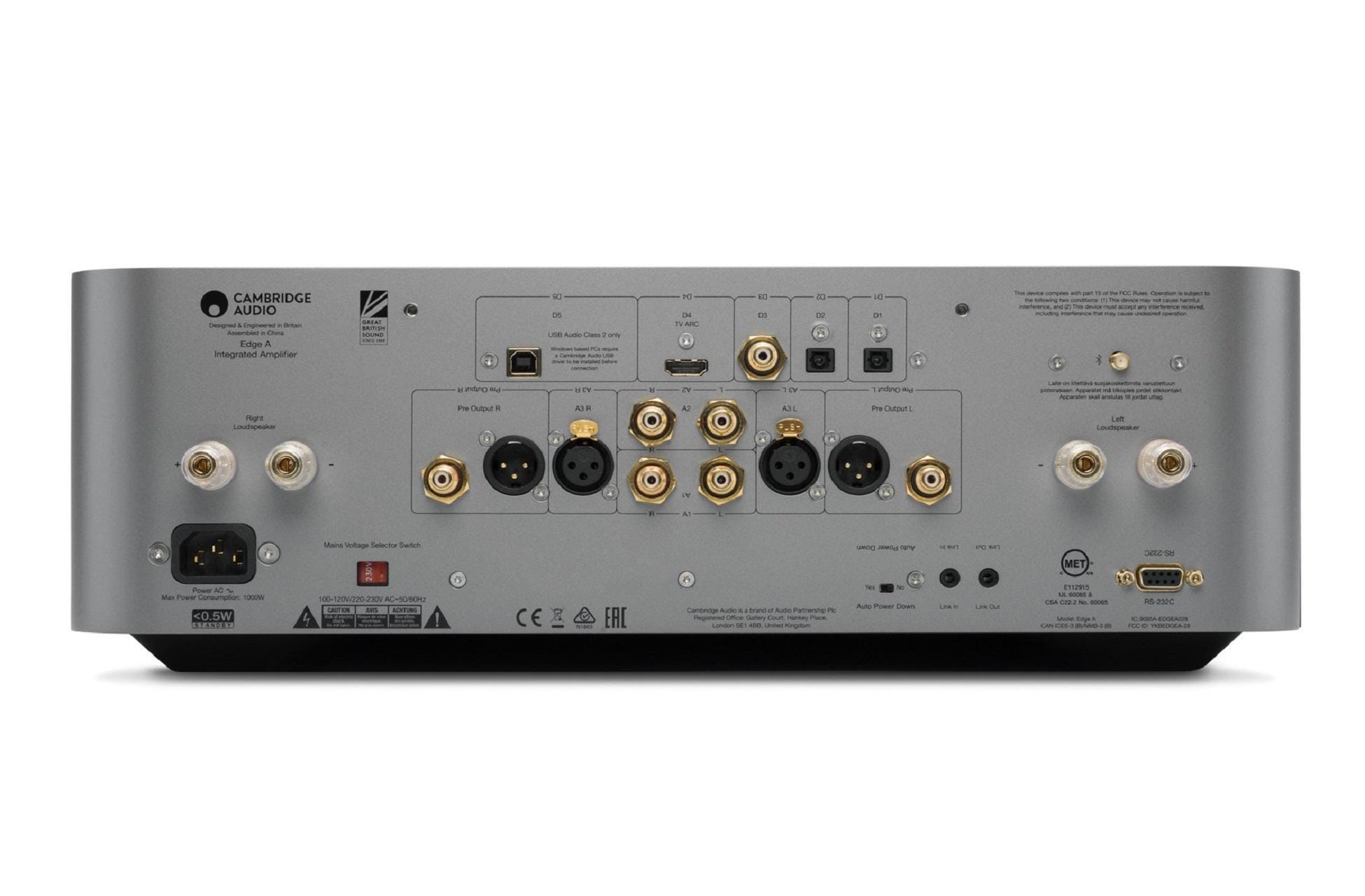
    Even this feeder is not simply a very strong piece of copper. They are, in fact, two toroids that are mounted on the same axis. They are then rolled in opposite directions, which means that, they eliminate the flow of each other. There are also other interesting peculiarities. The output phase has no capacitors, choosing instead to use a direct coupling drawing that denies that they are necessary. This is not commonly found and means that Edge A has more than differences in detail from its rivals at a similar price. Similar to cars, the argument seems to be that, in order to “prove” that they live until the creation of an amplifier at this price.Cambridge Edge A amplifier has three analog options; a pair of RCA inputs and a single balanced input. This may seem limiting, but, realistic for a moment, the number of customers with more than three analog sources in 2020 is not terribly significant. It should also be seen along with the other connectivity that has Edge A. This extends to five connections. Four of these are quite normal – two optics, a coaxial digital connection and a USB-A connection that supports PCM and DSD256 at 384 kHz. This means that if you add a streaming transport, Edge A is a separate system. There is also Bluetooth-enabled HD aptX and for a pretty stylish fast and dirty connection system. However, the last entry is more unusual. It is an HDMI ARC jack which means that edge A can be connected (and wake up/turn off with) a properly equipped TV.


    Using Edge A for film and television work is exceptionally effective. Throughout a wide selection of films and television works, Edge A used the same sentimental presentation to absolutely excel. Select each box you could realistically sort in terms of dialogue, sound scenery, and critical immersion feel for two speakers to create a realistic listening experience. Edge A has its work cut off, but more than meets the challenge. Last but not least, all the boring bits of the process also work. The latency is perfect and auto-start with HDMI also works well. The Cambridge Audio is indisputably a relatively high-end stereo amplifier, but it doesn’t fail in the kind of thing a 150-pound soundbar can do well. Edge A asks very little of itself in exchange for being an excellent partner for your TV.

    The highest level of digital streaming – via USB
    If you have a nice library of digital music stored on your laptop or PC, then the best way to access it is via USB. The USB Audio Class 2.0 interface supports up to 32 bits/384 kHz or DSD256 for effortlessly high-resolution music playback.

    Studio-level XLR balanced inputs and outputs
    If you prefer analog connectivity, Edge A has also covered. An XLR balanced input set allows you to connect a suitable network CD player or streamer with studio quality accuracy. Balanced cables provide better shielding and a more stable signal, allowing you to hear every detail edge A can.

    High-resolution Bluetooth
    With aptX support, the built-in Bluetooth receiver gets the best out of your smartphone or tablet. This wireless connection comes close to CD quality and provides the convenience of broadcasting music directly from your device.

    Connect your TV via HDMI
    When your amplifier sounds so good it would be a shame not to let your TV share the benefit. An HDMI with ARC (Audio Return Channel) means you can connect your TV and benefit from audio playback through the amplifier – VH1 will never have sounded so well! Photo:Cambridge Audio

    Other digital and analog devices – fully connected
    With built-in DACs (digital to analog converters), Cambridge Edge A amplifier improves the sound of digital components. Connect up to three devices, such as CD/DVD player, game console, and streamer, and you’ll have a meaningful audio update. For analog sources there are two additional pairs of RCA phono inputs, perfect for connecting a quality sound stage.

  • Stereo Amplifier Steljes Audio ML30HD – Get a smooth, valve sound

    Stereo Amplifier Steljes Audio ML30HD – Get a smooth, valve sound

    Combining the best of traditional and modern technology, the Steljes Audio ML-30HD valve amplifier has all your music covered.

    Soft valve sound
    Combining a valve stage with a more traditional amplifier design, the ML-30HD delivers a fluid, fluid sound that is unique to valves. However, unlike valve-only designs, the ML-30HD supports this smooth sound with a powerful 30 watts per channel – much larger than a valve-only amplifier of this price it can produce. The result is a sound that is soft but also powerful enough to bring most speakers to high levels in most rooms.

    High-resolution USB input
    With an integrated USB DAC (digital to analog converter) that has been credited as Hi Res Audio compatible, the ML30HD gets the best out of your digital music files. Connect your computer or laptop and you can transmit music files at a resolution of up to 24 bits/96 kHz.

    Built-in Bluetooth
    With a built-in Bluetooth receiver, Steljes Audio ML-30HD Stereo Amplifier is the perfect way to stream music from your smartphone or tablet to your high-fidelity system. Stream music stored on your device or take advantage of music streaming services like Spotify or Apple Music, all from the comfort of your smart device.Steljes Audio ML30HD

    Connect the disk deck
    Thanks to the built-in MM (Moving Magnet) sound stage, it is possible to connect most turntables, without the need for a separate pre-amp.Photo:Steljes

    The rest of the covered system
    In addition to USB, Bluetooth and phono stage inputs, the ML-30HD also has a line-level input. This is ideal for a wide range of sources, such as a gaming console, TV or MP3 player. Other connections include a headphone jack and a preamp output. The preamp output allows you to connect a more powerful power amplifier as a future update.Steljes Audio ML30HD

    Get a smooth and powerful sound from all your music sources with the Steljes Audio ML-30HD multitasking.

    Steljes Audio ML-30HD Product Specification;


    • Power Output: 2x30W
    • Frequency: 20-50KHZ
    • Harmonic Distortion: 0.01%
    • Line Gain: 32dB. Phono Gain:72dB
    • Input Impedance: 80k Ohms
    • Output Impedance: 4 Ohm -8 Ohm
    • Phono Impedance: 47k Ohms
    • Headphone Impedance: 32ohms-160ohms
    • USB DAC: 24 Bit 96kHZ
    • Bluetooth: Bluetooth 4.0
    • Inputs: MM Phono, Bluetooth 4.0, USB DAC, LINE
    • Output: Preamp, Speaker
    • External Power Supply: AC100V-264V/50-60Hz
    • Tube: 6N3 (5670)
    • DIMENSIONS
    • 120 x 260 x 210mm (H x W x D)
    • Weight: 2.4KG