Home Blog Page 172

Securing a Local Network Infrastructure Using IEEE 802.1x

0

The 802-LAN/MAN-Standardization Committee of the Institute of Electrical and Electronics Engineers (IEEE) develops standards for Local Area Networks (LAN) and Metropolitan Area Networks IEEE-802 protocol (MAN) . The most widely used standards are those of the Ethernet suite suite (IEEE 802.3), the Token-Ring (802.5) and the 802.11 series standards for wireless LANs (WLAN) .

For the security of access to such networks a subgroup of the 802 committee is working on a standard labelled IEEE 802.1x [IEE01] that aims to restrict access to LAN services to those users or devices with proper authorization. This standard can basically be used with diverse technologies of the 802 series.SecuringLocal Network

The basic characteristic of the standard is port-based access control control , which is used to perform authentication and authorisation of devices connected to LAN ports. A LAN port is a logical access point with point-to-point connection characteristics. It could be the access port of a Fast-Ethernet switch or the logical access point of a WLAN base station. The IEEE 802.1x standard conceptually distinguishes between two logical ports (also see Figure 10.1): an uncontrolled port, which enables a device to prove its identity through an authentication exchange, and a controlled port, which allows proven authenticated devices to access the general data transmission service of the local area network.

Three principal roles are distinguished in the authenticity verification of connected devices:

– A device that wants access to the data transmission service of the local area network finds itself in the role of supplicant when it is providing and proving its identity during the authentication exchange.

– The access point of the LAN infrastructure, such as an Ethernet-Switch, functions as an authenticator demanding that a device provide and prove its identity.

– The authenticator does not itself verify the credentials provided by a supplicant during the authentication exchange. Instead, it forwards them to an authentication server that then notifies it of the results of the authentication verification. Prior to a device’s successful authentication of itself to the authenticator of a local area network, it only has access to an uncontrolled port. This port is uncontrolled in the sense that it can be accessed even before authentication has been successfully performed. However, it only allows authentication message exchange and cannot be used for the transmission of arbitrary data units. An authentication exchange can be initiated by a supplicant as well as by an authenticator. The controlled port is opened as soon as the exchange is successfully completed.

For the exchange of EAP protocol data units IEEE 802.1x specifies the protocol EAP over LANs (EAPOL), which mainly defines techniques for the encapsulation of EAP-PDUs into the payload of transmission frames of the 802 protocol suite. The encapsulated PDUs are then exchanged between the Port Access Entities (PAE) of the supplicant and the authenticator. Conventional RADIUS messages can be used between the authenticator and the authentication server. In summary it should be noted that IEEE 802.1x primarily access control for LANs provides access control for the transmission services offered by local area networks. However, the standard does not define how to secure actual data transmission from passive or active attacks and additional security protocols are therefore required.

Pick A Niche Market For Internet Marketing

0
The Internet is the ideal platform to develop a good branding strategy.
It is important to know what your target audience looks like. You do not want to waste your advertising budget on consumers who do not want or need your products or services. All of your advertisement budget should be used to target the specific consumers who may require your company’s products.Internet marketing
When a customer decides to take the time to review your product or service, you should keep your fingers to yourself and just heed the advice. If customer X says that you should change Y, give it some serious thought.
Attract people by offering free products, samples or interesting discounts. Offering free products is an excellent way to collect information about your typical customer, for instance through surveys and games. You can easily reach out to more people by asking your customers to share your content on social networks to benefit from a discount or be entered to win a prize. Offer discounts on a regular basis and make sure you connect these discounts to extensive information about your products. A discount will convince a few customers to order something, but quality reviews will convince even more people and perhaps bring attention to other products.
Your website is what’s going to inform people that you’re a professional who takes business very seriously. If you’ve been to a few websites before, then you already know that it’s easy to tell the difference between a legitimate business and some personal site. You should focus on designing a professional site so people know you’re operating a real company.
Having the owner of an Internet company write a blog personalizes the goals and interests of your company. Customers are more likely to root for and do business with a company they feel they understand. The owner of your company will also make consumers feel important when the needs and interests of customers are addressed in such a personal manner.
Just because you have a professional main site for your business doesn’t mean that you have to be the suit-and-tie type at all times. Let your hair down and create a social networking site or two. You can tie your Facebook and Blogger page in with your main site and give customers a different way to communicate with you.
Send emails with links to your site to both current and potential customers. A regular email newsletter helps you to remain in touch with customers, bringing them back for repeat business. It also helps customers to see what new products you are bringing out or any changes you are making to existing product lines. It’s much easier and less expensive to maintain existing relationships with customers than it is to recruit new ones.
Be different. Remember, the thing about the Internet is that there is a lot of everything. However, no one can bring the unique skill set to the table that you have. Keep in mind that you have something special to offer and offer it.
Take the time to find the right target audience and establish a complete branding strategy that corresponds to this audience. Do not neglect other aspects of Internet marketing such as search engine optimization for instance.

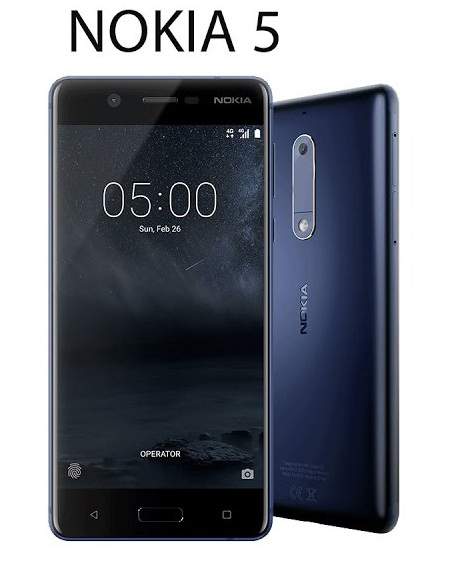
New Nokia 5 Android with excellent price

0

The new Nokia 5 has a 5.2in IPS HD display within a neat, compact body (149.7×72.5×8.05mm) that’s smooth, sleek and comfortable to hold thanks to rounded edges. It’s made from a single block of 6000 series aluminium for a premium finish, and
uses Gorilla Glass to add durability to the display.The Nokia 5 will be available in Matte Black,Silver, Tempered Blue or Copper. We particularly like the blue option, but think that all four colours look gorgeous.

The three mid-range phones are the first Android Nokia phones ever

We’ve already mentioned the 5.2in display, which looks gorgeous with tiny bezels and seems to blend right into the chassis. Its downfall though is that its display’s resolution isn’t as high as we’d have liked at 1280×720 HD. It was still vivid
and bright, but when compared with the likes of the Moto G5’s Full HD offering on a phone with the same price tag it’s a bit of a shame that the Nokia 5 misses out.
Inside the phone is a Qualcomm Snapdragon 430 processor, which is the same one you’ll find inside the Nokia 6 as well as the Moto G5. That’s paired with Adreno 505 graphics and 2GB RAM.We’ll have to hold of on our final verdict about the Nokia 5’s performance until we’ve put it through its paces in our benchmark tests, but we expect it to cope with launching apps and switching between apps perfectly well, while struggling a bit with more heavy-duty multitasking or gaming.
There’s 16GB internal memory with support for up to 128GB extra via microSD.
When it comes to cameras, the Nokia 5 has a 13Mp camera on the rear with a dual tone flash,while the front-facing camera offers 8Mp for selfies.There’s a non-removable 3000mAh battery that charges via Micro-USB and you’ll also
find Bluetooth 4.1, NFC, LTE 4G, among its connectivity specifications.newnokia

Software
All three of the new Nokia Android phones ship with Android Nougat 7.1.1 and HMD Global has We’re impressed by the Nokia 5, particularly when considering the price tag. It’s good-looking with decent specs and we love addition of
Android without over complicating it with any sort of overlay. We expect that it could become a really popular choice for anyone in the market for a mid-range phone, and a strong contender for the Moto G5.
Specifications:
5.2in (1280×720, 282ppi) IPS touchscreen
Android 7.1.1 Nougat
1.4GHz Qualcomm Snapdragon 430 CPU
Adreno GPU
2GB RAM
16GB storage
MicroSD up to 256GB
13Mp main camera, dual-LED fl ash
8Mp front camera
Bluetooth 4.1 4G LTE
GPS
NFC
Fingerprint scanner
FM radio
3000mAh non-removable battery
149.7×72.5×8.05mm

Price-£160

source:android advisor,nokia.com

Smartwatch review Samsung Gear S3-superb battery

0

In stark contrast to most smartwatches, the Samsung Gear S3 has great battery life: charge it to 100% and it’ll last you almost five days. The first four days with normal operation and then, when it hits 5%, more than 24 hours of use in power-save mode. That’s fantastic stamina for any smartwatch, let alone one with a colour AMOLED display. Then there’s the aesthetics. The Samsung Gear S3 is available in a couple of flavours – the Classic and the Frontier – and both look stunning. The Frontier is a real looker, finished in smoky, gunmetal grey, with a burly rubber wristband (both large and small sizes are included in the box), butch knurled buttons, and an aggressively notched bezel that rotates with a light clicking action, just like on a dive watch.Samsung Gear S

The difference is that this bezel isn’t simply for adornment or timing purposes; it’s part of the fabric of the way the watch works. Spin it and the watch face whirls away to reveal a galaxy of different notifications and widget screens. It’s also used to scroll through items in lists and alter settings, depending on whereabouts in the UI you fi nd yourself. The Gear S3 watch still has a responsive touchscreen, but I found myself using the bezel whenever possible because it leaves the screen free for reading. The 1.3in panel has a resolution of 360 x 360, and it’s topped with Corning’s wearable-specific scratch- and shatter-resistant Gorilla Glass SR+. It’s comfortably readable in most conditions at the default setting of seven and, handily, it automatically dims in low-light conditions, so it won’t annoy everyone in the cinema when you check the time. The problem with the Samsung Gear S3 is that it’s a bit beefy. At 46 x 12.9 x 49mm (including the lugs), it’s thicker than most smartphones, and I found that with some shirts it wouldn’t slip under the cuf s comfortably. If you have more slender wrists, you may prefer to stick with the Gear S2.

There’s NFC, 4GB of storage for music, wireless charging via the WPC standard, and a dual-core 1GHz Samsung Exynos 7270 chip with 768MB of RAM. It only slowed down while playing Fruit Ninja – but that’s not what the S3 was made for. In every other respect, it responds smoothly and instantly to touchscreen dabs  and clicks of the bezel.

But, the Samsung Gear S3 isn’t properly waterproof like the Apple Watch Series 2; it’s water-resistant and rated to the IP68 standard. This means that, although the watch can be submerged to a depth of 1.5m in freshwater for up to 30 minutes, you can’t take it for a swim. That sets the Samsung Gear S3 at an immediate disadvantage to the Apple Watch Series 2, which has a decent swim-tracking mode in addition to GPS and heart-rate monitoring. But the Samsung hits back with excellent automatic tracking and stats-packed activity monitoring. Walk briskly for a few minutes and the watch will quickly pick that up and log it as an activity. The same happens if you take it for a run and forget to manually hit start. It will also auto-pause when you stop to cross the road, and it reports a rich bank of data to your phone once you’re done, from the usual average speed, distance and average heart-rate data to the more unusual average and maximum cadence.

It all feeds into the S Health app on your phone, which syncs the data and presents it in a more digestible manner. If you’re familiar with the app through owning a Samsung phone, there will be no surprises here: the app presents your goals at the top of the main page with a couple of key stats on graphs beneath (steps and sleep by default), with specifi c data, from your stress levels through SpO2 and floors climbed, encapsulated in a series of square panels below that.Note that Gear watches are no longer limited to working with only Samsung phones. Although the Gear S3 runs Samsung’s Tizen wearables OS, you can pair it on any modern Android phone via the Samsung Gear app.samsung Gear S

The Gear S3’s Wi-Fi connectivity means you don’t have to be within Bluetooth range of your phone to receive notifications and make/receive calls, so if the phone rings you can answer even if you’ve left your phone by the bed. The speaker also allows the watch to double as an interactive fitness coach while you’re working out. It will gee you up when you start to fade and deliver timely audible info as you pound the pavement. The only problem is that the speaker isn’t loud enough to hear over the rush of breath from your lungs and the blood pounding in your ears, so you’ll have to use the Gear S3’s Bluetooth connectivity to hook up a pair of headphones instead. These new capabilities build on the Gear S2’s already-impressive collection. There’s an optical heart-rate monitor that continuously tracks your pulse during exercise and keeps tabs on your resting rate with spot checks during the day. There’s an altimeter/barometer and an associated app, keeping tabs on your altitude and atmospheric pressure. The fitness side of things is particularly strong, offering most tools that fitness fanatics need to log exercise and keep motivated. Notifications work just as well as on Android Wear watches. The big bonus, though, is that the Samsung Gear S3 combines all of those things with superb battery life and luxurious high-end design. It feels like a luxury watch and a high-end smartwatch combined. It’s a pleasure to use, to wear (as long as your wrists aren’t too slim) and to train with, and even at a price of $500, it’s now the Apple Watch alternative to beat. If you own an Android smartphone and you’re looking to invest in a smartwatch, you should put the Samsung Gear S3 at the very top of your list.

$499 – www.samsung.com 1.3in 360 x 360 AMOLED display • dual-core 1GHz processor • 4GB memory • 768MB RAM • GPS • 802.11n Wi-Fi • Bluetooth 4.2 • heart-rate sensor • IP68 water and dust resistance • 380mAh battery • 1yr RTB warranty • Samsung Tizen 2.3.2 OS • 46 x 12.9 x 49mm (WDH) • 62g

source:pcauthority

AfterShot Pro 3 software-organise and tweak your photos

0

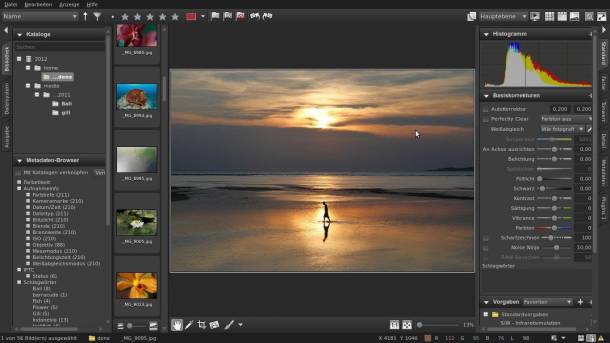
AfterShot Pro 3 is a program aimed at photographers of all skill sets; it’s a package for organising, tweaking
and sharing your photos. Although it perhaps isn’t as advanced as more expensive programs
on the market, it positions itself as compact and capable at the basics, making it easy to process photos while offering the ability to watermark shots and fantastic layering options.
The first thing that really grabs you about AfterShot 3 is not just how clean the layout of the program is but how responsive and
quick it is too. AfterShot feels really easy to use but boasts new correction tools to help fix chromatic aberration and lens distortion, and the presets included in the program are useful for making simpler edits to your pictures.
The layers panel is what really makes AfterShot feel so user-friendly though; while the editing tools themselves vary in terms of
how sophisticated they are, the layers panel breaks them down into far more manageable editing steps. The sliders within the program,that can help control everything from basic  adjustments to advanced exposure options,are also easy to use and of fantastic quality.
AfterShot is considerably cheaper than a lot of RAW processing programs on the market,and in all honesty, it does feel so. But while it does take a more simplistic approach than some of its rivals, it’s not without its marquee features that set it apart from others. It’s still quick and powerful and offers a lot to hobbyist photographers as well as professionals.AfterShot Pro

Powerful non-destructive photo editing

Apply adjustments exactly where you want them with unique Layers and Regions capabilities that isolate precise areas of your photo for adjustment.

Whether you’re shooting in RAW or JPEG, you can alter your photos using a wide variety of adjustment tools, including Crop, Straighten, Highlight Recovery, Noise Removal, Color, Temperature, Exposure, Highlights, Fill Light and more.

Easily make adjustments to multiple versions of your master photo without ever changing your original file. Make an unlimited number of versions of one image, with a wide variety of corrections and customizable presets, including Black & White, Cross Processing and more.

Create impressive photos with intense visual contrast using High Dynamic Range (HDR) tools. Combine multiple exposures to create a single, stunning HDR photo. Within the AfterShot HDR module, apply Smart Photo Fix, White Balance, Brightness/Contrast, Fill Light/Clarity, Local Tone Mapping, High Pass Sharpening, and Digital Noise Removal.

AfterShot Pro integrates well with Photoshop. With AfterShot Pro as your batch-photo processor and image manager, you can quickly process your RAW photos. Then, when you’re ready for more detailed editing, simply click the “Edit with External Editor” button to export in TIF directly to PhotoShop.Sort, organize and view all your photos in one place, quickly and easily with flexible file management options–no importing required.

source:dphotographer

Ambilight TV 4K HDR Philips 43PUS6401 with DVB T/C/T2/T2-HD/S/S2 tuner

0

The Philips 43PUS6401 doesn’t carry the UHD Premium badge the Samsung does, not least because it has a maximum
brightness of only 350 nits -a UHD Premium set needs at least 1000 nits-.
HDR is still technically possible on this set, but you’ll need to make sure you have the most recent firmware update.
Once you do, the PUS6401 will recognise an HDR source automatically and tweak its settings to suit, though annoyingly
Philips TVs still don’t support HDR on Netflix or Amazon content.

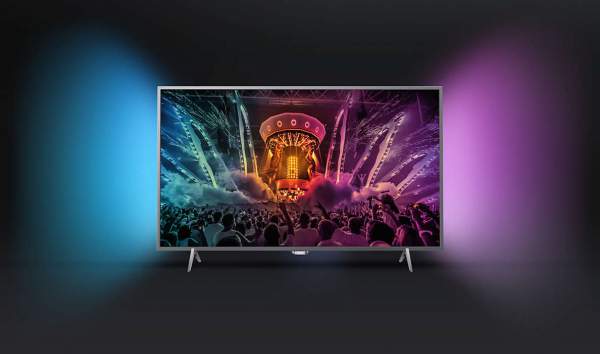
Philips 43PUS6401 have two-sided Ambilight, shining a little added light on proceedings. It’s easily toggled on or off from a dedicated menu button, but we enjoy it when watching movies (setting it to follow the on-screen picture works best for us). The solid white light option also proves handy for softer bias lighting, which is particularly useful because we find the PUS6401’s
panel to be quite reflective.Philips unique Ambilight technology makes your screen much wider—and your viewing experience more immersive—by emitting an extra wide glow from two-sides of your TV screen onto the surrounding wall.

Connectivity wise you’re fairly well covered, with four HDMIs (two support HDCP2.2), three USBs and single
component and analogue ins. There’s even a SCART for older connections and a single optical out for outputting your
TVs sound to a soundbar.Philips PUS

There’s wi-fi or ethernet for hooking up to your home network, and once you’re online, you’ll be able to access the
TV’s on-board Android TV system. It’s not our favourite user-interface by a long shot , but it is slowly improving.
With apps for Netflix and Amazon, it ticks many boxes. The ability to cast from portable devices helps, but Android
TV is still behind its rivals when it comes to choice.
Once set up, the Philips’ lack of brightness  is noticeable in its more subdued picture performance and colour palette.
On the whole, colours lack the same level of accuracy, with reds looking a touch orangey while blues and greens  are overly bold. It’s not unexpected at this level, but something we weren’t able to balance out with the regular settings.
Philips Quad Core processor meets the power of Android to deliver an exciting gaming experience. And with Android on your TV you’ll navigate, launch apps and play videos in a way that is super fast, super intuitive and super fun.

HDR pictures lack the punch in colour and brightness to really get the usual benefits of the technology across. You’ll
see a touch more subtlety and sparkle in highlights compared with regular SDR content, but it isn’t capable of hitting  home with the same intensity.It’s in dark scenes where the picture is most lacking, with the set not capable of deep enough blacks, nor shadow detail,to give a murky scene much impact.Philips PUS
Watching in a darkened room helps, but emphasises the rather poor backlight uniformity that can become noticeable
in darker scenes. The set ultimately lacks a good grip on contrast – introduce a bright element to a dark scene and it will
struggle to balance out the two. And outlines could be better etched.With no motion processing employed,fast-moving pans look a little unnatural.Setting the Philips Natural Motion settings to minimum helps.4K Blu-ray pictures will benefit the most from the capabilities of this set, but it struggles with darker scenes and, even with its price tag in mind, the overall lack of brightness takes the sparkle off a little.Compromise is the word here, and  there’s plenty of those to be made with this set. You may find saving up a touch more means fewer compromises where it really matters.
source:Philips  What hi-fi

GFX 50S New mirrorless digital format camera by Fujifilm

0

The retro designed Fujifilm GFX 50S carries much more than a passing similarity to stablemates in
the XT series.
The wraps are off Fujifilm’s new mirrorless digital medium format camera system and it
looks set to revolutionize the type with its dimension,functions and price.

A lot of options here beginning with JPEGs at three compression levels and two image sizes.
Max image size is 8256×6192 pixels and there’s a total of seven aspect ratios – 4:3, 3:2,
16:9, 1:1, 5:4, 7:6 and 65:24 . RAW files are captured with 14-bit RGB colour (RAF format) and there’s the
option of RAW+JPEG recording. RAW files are automatically captured with 12 MP thumbnail JPEGs.In-camera RAW-toTIFF
conversion.
Structured on a 256-zone metering system (from the imaging sensor) with multi-pattern, centre-weighted
standard,fully averaged and spot measurements.Program,aperture/shutter-priority auto and manual control
modes. Up to +/-5.0EV compensation and auto bracketing over two, three,five, seven or nine frames
at up to +/-3.0 EV/frame.FUJIFILM GFX S

Huge 8.1 cm LCD panel adopts the three-way tilt adjustments introduced with the X-T2 plus there’s
adjustments for brightness and colour balance.Image can be enlarged by up to 16.7x to support with
focusing. Resolution is 2.36 mega-dots and touchscreen controllability extends to Touch AF tap-to-focus.

Innovative NP-T125 lithium-ion pack is good for 400 exposures according to Fujifilm.The optional
VG-GFX1 vertical grip holds an additional battery pack and
can be used for re-charging.

3 GF Series lenses are available immediately,additional three by the end of 2017. Given
Fujifilm’s track record with the XF lenses, there’ll be more in 2018 with a longer telephoto possibly heading
the list. All the GF lenses are all weather-proofed.Current line-up is a 63mm f2.8 standard prime (equivalent to
50mm), 32-64mm f4.0 zoom (25-51mm) and a 120mm f4.0 macro lens (95mm). On the way is a 23mm f4.0 ultra-wide
(18mm), a 45mm f2.8 wideangle (36mm) and a 110mm f2.0 short telephoto (87mm).

The world’s first focal plane shutter especially designed for a digital medium format mirrorless camera
Speed range is 60 minutes to 1/4000 second with flash sync up to 1/125 second. Rated up to
150,000 cycles.There is also an electronic first curtain shutter to minimize vibrations
or a fully-silent sensor-based shutter which extends the top speed to 1/16,000 second and
eliminates all vibration.FUJIFILM GFX S
Exceptional level of photographic image quality,made by the integration of
a big 43.8 x 32.9mm optimised CMOS sensor and image design technology.

Source:Fujifilm

Philips OLED technology TV 55P OS901F/12-Fantastic!

0

Right from the off this 55in TV tickles you in all the right places. Its bodywork looks crisp and clean with slender lines and a bold, metallic finish. The gleaming soundbar hanging from its bottom edge promises better audio quality than you’d generally expect from a super-slim display, while the blade-like table-top legs do their best not to upset your Feng Shui. This being a Philips-branded TV, there’s the small matter of Ambilight to consider. This finds bold halos of colour radiating from the left, right and top edges of the bezel, via in-built LEDs. This can both make long-term viewing more relaxing on the eyes and increase your sense of immersion in what you’re watching. Do, however, restrict Ambilight’s brightness to around level two or three, and don’t set it to react too aggressively to changes in the image content or you’ll get an attention-grabbing light show. The Philips 55POS901F is well equipped with connections, including four HDMIs (all capable of 4K HDR at 60fps) and three USBs. The bulk of Philips’ online content options come courtesy of the Marshmallow version of Google’s Android TV platform, backed up by a smaller collection of apps housed under Philips’ own proprietary smart TV system.

The Philips app collection is integrated fairly neatly into the Android TV home page. Of the latter, I’d still prefer greater opportunity for customisation and a better sense of presentation priority. But I’ve been saying that for ages and Google isn’t listening. BBC iPlayer is the only one of the UK’s main catch-up TV services supported by the TV’s smart system. And, at the time of writing, the Amazon app only supports 4K, not HDR. The Netflix client, however, is fully up to 4K and HDR speed. Almost. The 55POS901F doesn’t join LG’s OLED TVs in supporting Dolby Vision HDR, a format that’s now available on both Netflix and Amazon, and will be supported by Philips’ own 4K BD players. Philips has, however, confirmed that the TV will be upgradable to support the Hybrid Log-Gamma format in the future. Bear that in mind if you’re shopping for a TV to cover all bases. The TV is supplied with a double-sided remote control – the back panel houses a QWERTY keyboard to make it easier to enter text into video apps, etc. It also has a centralised touchpad and voice search function. Philips says that the TV will display an onscreen message when the remote’s batteries are low.PhilipsPOSF

The Perfect Pixel Ultra HD processing engine driving the 55POS901F is Philips’ most powerful, featuring elements aimed at boosting contrast, colour, motion clarity, detail… every aspect of picture quality, basically. This may alarm the sort of AV enthusiast who prefers pictures to be tinkered with as little as possible on their journey from source to screen. However, powerful processing – when applied sensibly – certainly can improve image quality. This is a fact borne out by the Movie picture preset available here. This deactivates most of the processing engine elements, and delivers pictures that look less convincing and enjoyable than tweaked versions of some of the other presets. You need to pick your way through the features of Perfect Pixel Ultra HD and activate/deactivate to suit your tastes. For instance, I’d recommend turning off all noise reduction for 4K viewing, and only use the other processing options (especially the one that handles motion clarity) on their lowest power settings. At least Philips gives you the tools to make these corrections, though – and the result of your up-front tweaking efforts is some majestically good picture quality. The TV greets you with that familiar OLED impact when it comes to black level response. The shots of space around the Enterprise in the Star Trek: Beyond 4K Blu-ray feature black colours delivered with exquisite depth and naturalism. There’s not a hint of grey, nor any evidence of the sort of backlight clouding or striping around bright objects you would expect to see with an LED/LCD screen.

SPECIFICATIONS–3D: No 4K: Yes. 3,840 x 2,160 resolution HDR: Yes. HDR 10 TUNER: Yes. Freeview HD; satellite HD CONNECTIONS: 4 x HDMI inputs; 3 x USB inputs; Ethernet port; headphone jack; RF input; digital audio output SOUND: 30W BRIGHTNESS (CLAIMED): N/A CONTRAST RATIO (CLAIMED): N/A DIMENSIONS (OFF STAND): 1,228.6(w) x 751.9(h) x 49.4(d)mm WEIGHT (OFF STAND): 17.42kg FEATURES: Built-in Wi-Fi; USB multimedia playback; DLNA multimedia playback; Perfect Pixel Ultra HD processing engine; 3-sided Ambilight; Ultra Resolution; Perfect Natural Motion; Micro Dimming Premium; YouTube, Netflix, Amazon and BBC iPlayer apps; Android TV; USB recording/pause live TV; QWERTY keyboard on supplied remote; HDCP 2.2 on all four HDMI inputs

Clarity and sharpness are other strengths, and here Philips’ Ultra Resolution feature pays dividends. Activate this and you’ll see both native 4K and, especially, upscaled HD pictures looking markedly more detailed and crisp than they do on LG’s OLEDs. Sully’s New York landscape shots look so detailed, in fact, that they sometimes feel like they’ve crept beyond 4K. You need to reduce the Ultra Resolution sharpness setting a notch or two from its default position, though, or your eyeball enjoyment will suffer from noise and stressy edges. The 55POS901F proves excellent at motion handling. Even without motion smoothing in play, camera pans and fast-moving objects are crisp and free from judder. Use the lowest setting of Philips’ Perfect Natural Motion system and you can remove almost all judder without causing many unwanted side effects, or creating soap opera-style fl uid visuals. Although for some, one artefact is one too many. Philips’ in-built 30W speaker array sounds considerably better than the squawkers often used in super-thin TVs. The forward-facing soundbar delivers strong levels of clarity and attack in Star Trek: Beyond when the Enterprise takes on the baddies with the help of The Beastie Boys’ Sabotage, combining plenty of detail and punch with smooth, always intelligible vocals. A rear-mounted bass driver provides a decent amount of low-end heft, too, and none of the speakers succumb to distortion or crackling unless they’re driven to volumes well beyond anything likely to be comfortable for most rooms.

With all types of content, this Philips set is routinely brilliant, and – as mentioned – more accomplished when it comes to the fi ner points of image quality than previous OLED models. But there are areas where it’s not as impressive, of which potential buyers should be aware. Firstly, brightness is limited in comparison to incoming rivals – the newer OLED panels in LG’s 2017 range should push nearer to 800 nits, while LED-lit LCD TVs are marching on into the high 1,000s. As I cover in the feature on p20, this makes the Philips 55POS901F relatively limited in the amount of colour volume it can deliver. I was also slightly disappointed that the lowest input lag measurement I could get from the TV was 55ms. This isn’t disastrously high, but is nearly double what competitive gamers would like to see. Nor does this set cater for those with 3D Blu-ray collections. In keeping with Philips’ strategy with LCD TVs, 3D has been jettisoned. It’s also worth pointing out that you can get LG’s OLED55E6 for around £2,500 these days, saving you £300 on the launch price of this Philips. That model is also confi rmed to be getting HLG support to compliment its existing Dolby Vision and 3D playback talents, and uses the funkier WebOS user interface. Even judged purely on its performance, though, Philips’ OLED debut seems more than worthy of its £2,800 ticket, and is a great way to kick off the next stage of the OLED revolution.

source:home cinema choice

Headphone amplifier Arcam rHead

0

The rHead  is a standalone headphone amplifier, and an obvious visual match to the irDAC-II from the same brand . It’s a small, black box with a choice of one XLR and one RCA stereo input. The prevention of mission creep kicks in here, because this is not a two-input headphone amp; the choice of input is selected at the rear of the rHead, using a small toggle switch.Arcam rHead

The prevention of price creep kicks in at that back panel too, as the rHead draws its power from an external 12V, 1.5A power supply. Even the power switch is on the back panel. The front of the rHead is equally severe in its ornamentation. A little green light in the centre of the front panel to denote the juice is flowing. From the front, 3.5mm and 6.35mm headphone jacks poke out from a little recess on the left of the black panel, while a silvery volume control is to the right. The volume control has a standby/mute click to the far left of its travel, and the green LED turns orange as a result of engaging mute. Oh, and the Arcam rHead logo is printed on the top panel. That’s it! No tone stack (mission creep, remember), no balanced output (mission and price creep), no inch-thick aluminium front panel (price creep). In fact, there’s practically nothing on the rHead that gets in the way between music and listener from the outside.

This amplifier design is met by the digitally controlled but ultra-linear analogue Texas Instruments PGA2311A resistive ladder array volume control behind that shiny knob. This means that along with no crossover distortion, you have no tracking errors across gain settings. Tracking is an issue many traditional amp designers now turning their attention to the headphone world completely overlook, because a decibel between left and right channels notionally makes no great odds when you are several paces from your loudspeakers, but quickly becomes an insurmountable obstacle when your ears are a few millimetres from the drive units. In fact, the best conventional stereo amps now have superb tracking (the design here is pulled from Arcam’s own A49 flagship), but many lower cost options default to a simple potentiometer. Rather than a potential cause of price creep, this is money spent in the right places.Arcam rHead

The sound of the rHead is almost immediately impressive. The first time you power it up, it might take a few minutes before coming on song, but after that putting it into standby leaves it thermally active, and it sounds great almost the moment you move into the green. In fairness to Arcam, this review was conducted during a wintery cold snap in the UK, and it came out of the box like it had come out of a freezer, so maybe that had an influence on that first half hour or so. In use, the rHead runs warm to the touch…more on Hi-Fi Plus

headphone amplifier Arcam rHead

Oral-B Genius 9000 smart-toothbrush

0

ORAL-B’S BEEN TOOLING AROUND with this “smart-toothbrush” concept for a couple of years now, with many of its models now offering built-in Bluetooth and the ability to connect to an app to track brushing statistics, as well as how often you floss, brush your tongue and/or rinse with mouthwash. The Genius 9000 is the latest flagship in this smart range, although in terms of actually ‘new’ features, it’s not particularly ambitious.

It offers the same six brushing modes (which change the speed and oscillations of the head to focus on specific cleaning techniques) alongside the Android and iOS app that times your brush sessions and, while it does so, displays weather, news headlines and calendar appointments, presumably to keep you entertained for the two minutes it takes to clean your teeth.

The headline new feature is ‘position detection’ (something that’s proudly touted on the front of the box), but this is actually mostly enabled by software — to use it, you need to stick an included bulky plastic phone-holder onto your bathroom mirror at head height (a bit like a car windscreen mount, just with the added excitement of potentially dropping your phone in the sink) and then insert your phone, with the device’s camera pointed at your face while you brush. Oh, and you have to confirm your camera’s positioned correctly every time you use Position Detection — and refrain from moving your head too much while you do so.  In testing, moreover, the app’s ability to actually detect brush position wasn’t great. At best, it was a little bit laggy to recognise when we’d moved the brush — particularly when we were brushing the front area — which often led to us having to brush for prolonged periods until the app actually decided we were done. oral b genius 9000

There’s seemingly a good reason the designers haven’t made this the default mode, then — most people will find it just too inconvenient to be useful. Moreover, it’s arguably not a huge improvement over the regular brushing timer, which can be paired with a visual aid to prompt you to brush four specific sections for a proscribed time period. What’s actually more useful in this Genius 9000 pack is that the included carry case, which has its own secondary-battery and doubles as a charger, so it’ll re-juice your brush while it’s packed away. That adds to the weight, but if you’re going on a prolonged trip, it’ll save you from having to take a charger (although that’s admittedly quite compact).  The shortcomings we’ve highlighted  don’t make this a bad electric toothbrush — it’s just not a particularly smart or insightful one. You’ll need to be a brushing obsessive to bother sticking with certain features, but either way, it still gives a nicely refreshing clean.

Bluetooth 4.0; Android & iOS apps; six brushing modes; four brush heads; charging case included.

Oral B

source:techradarÂ