Home Blog Page 173

Toyota Closes Another Gap in Sustainable Mobility

0

Green driving just got one option richer in Japan. At one of its largest press conferences since introducing the Mirai two years ago, Toyota launched its new Prius PHV plug-in hybrid. The automaker is shooting to sell each month 2,500 of the cars it considers to be a key to sustainable mobility.

Consumers nowadays have a broad range of electrified vehicles to choose from. Toyota has just cleared 10 million units in sales of regular hybrids, which across all brands already make up around 45 percent of new car sales in Japan.Toyota is planning to jump into mass-producing electric cars in 2020, and has started in December 2014 sales of the Mirai, the worlds first mass-produced FCV fuel cell car.toyotaphv

Interestingly, Toyota Chairman Takeshi Uchiyamada expects all of the mentioned to stay in the market. Different communities have different expectations, and Toyota will develop what is needed. Yet he said that the PHV closes an important gap.

While he expects hybrid sales to dwarf those for PHV’s for quite some time, he said that society needs a vehicle like this. And as technical evolution proceeds and technology becomes less costly, he foresees that sales will ramp up quickly. Toyota has already confirmed 8,000 pre-bookings, and monthly sales targets are five times higher than they were for the previous model.

Ultimately, Japan is expected to account for over half of sales volume. The car launched last November in the U.S. with limited volumes and reportedly had a good start. It will be coming to Europe, South Korea and Taiwan in March this year.

Toyota launched the first-generation Prius PHV in 2012 and has so far sold around 22,000 cars in Japan and 75,000 worldwide.The revamped model improves on its predecessor in crucial areas. Most importantly, the range it can drive in full electric mode has been extended from 20 to 68 kilometers. After the battery is depleted, the car achieves mileage of 37.2 kilometers per liter of gasoline.The car can be charged at quick charging stations in just 20 minutes or at normal power outlet at home, where it needs about 140 minutes at 200 volts for a full charge. Buyers can choose a solar panel roof to charge their car, the world’s first solar charging system in mass-produced cars.

Another treat is the new external power supply function. Even without starting the engine, the Prius PHV can supply household electricity. With its engine running and starting with a full tank, it can supply 1,500 watt of power for up to two days – and thus be a life saver in serious situations such as earthquakes and other natural disasters.

source:japanindustrynews

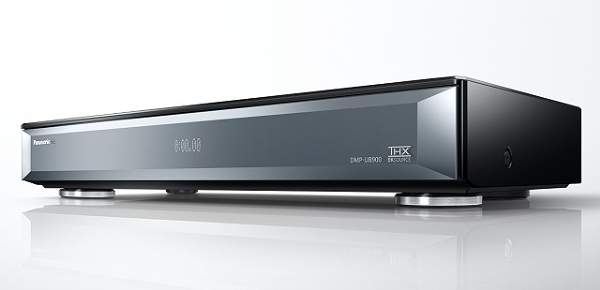
High-quality Panasonic DMP-UB900 Ultra HD Blu-ray Player

0

The Panasonic DMP-UB900 is the 1st THX-certified Ultra HD Blu-ray player.While this does not automatically signify an benefit over non-certified players,it does guarantee a typically
high baseline functionality level.
The DMP-UB900 also features the company’s High Precision Chroma Processor, which interpolates native 4:2:0 content on both Ultra HD and regular Blu-ray to a 4:4:4 format.In addition, Panasonic’s player offers
linear remapping of HDR content on discs for display on regular dynamic
range TVs. For those interested in 3D, the DMP-UB900 can also play Blu-ray 3D discs.Panasonic DMP UB
Netflix 4K streaming is supported on the DMP-UB900, andNetflix HDR is now said to be supported as of the
unit’s version 1.5 firmware upgrade.Other applications include YouTube,
Amazon InstantVideo, and Vimeo. Panasonic’s promotional materials for the DMPUB900 say it can stream native 4K
content from YouTube, but the 4K clips we checked out all indicated they were simply being delivered in typical HD
format. It turns our that the DMPUB900’s YouTube app doesn’t really support this. Even so, the DMP-UB900
does a good enough job of upconverting streamed content to 4K that
most people won’t be able to tell the
difference.Confusingly,the Panasonic omits Vudu and UltraFlix,the other two streaming applications at this time
offering 4K.

In aspect due to its audiophile intentions,the Panasonic DMP-UB900 also seriously outdoes its competitors when it
comes to connectivity.In addition to a pair of HDMI ports (one HDMI 2.0a) on the back panel (configurable for
video-plus-audio,video-only, or audioonly output),it also provides 7.1-channel analog, stereo analog,
and coaxial and optical digital outputs. There’s also a LAN connection back there.Around front,the previously mentioned USB port and SD memory card slot are hidden beneath a flip-down panel next to
the disc drawer.We always liked the SD card slot Panasonic provides on its players,a unique feature that lets you easily
and quickly view photos and video clips on your TV that were shot with a digital camera.

The Panasonic DMP-UB900’s HDMI menu provides settings to select output resolutions up to 4K/60p along with
4:4:4 (12-bit) or 4:2:0 (8-bit) color depending on the functionality of your display.There is also an Advanced
Settings submenu with options to select Deep Color and HDR output.A Video Settings menu provides
additional adjustments,for example advanced settings to tweak sharpness and noise reduction, along
with basic ones for luminance,gamma, and color. The player as well provides two picture memories to
store and recall your adjustments.Panasonic DMP UB

With the introduction of Panasonic’s DMP-UB900, we lastly have a player adequately suited up to provide
the high quality potential of not just Ultra HD Blu-ray, but regular Blu-ray,a format many enthusiasts have an
investment in and will continue to watch for years to come. In addition,
the DMP-UB900 sounds excellent when playing both hi-res audio files and CDs. Add to that list a full-featured
remote control and flexible connectivity solutions,and it becomes clear which Ultra HD Blu-ray player
is leading the pack-at least until models that also support Dolby
Vision begin to arrive.

Dimensions (WxHxD, Inches): 17.2 x 2.7 x 7.9
Weight (Pounds): 5.3 – Video Outputs: HDMI (2, 1 ver. 2.0a) • Audio
Outputs: 7.1-channel analog RCA, Stereo RCA, coaxial and optical digital –
Other: LAN , USB, SD Card slot
PANASONIC DMP-UB900 ULTRA HD BLU-RAY
PLAYER
PRICE: $600
Panasonic – panasonic.com

High-quality up-conversion
of Blu-rays and DVDs
Powerful detail improvement and noise reduction
Full-featured remote control

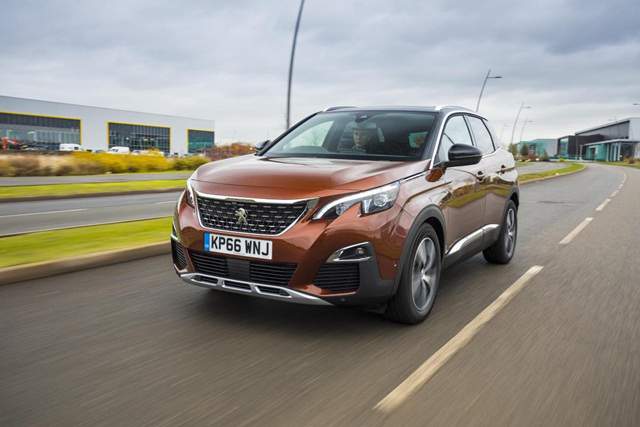
PEUGEOT 3008-New French Car Launch

0

To be seated behind the wheel of the new Peugeot 3008 is an engaging experience.The French firm has introduced its i-Cockpit into the family-sized SUV to provide a driving environment right up there with the very best on the market.

What’s more, you don’t have to buy one of the top trim levels to enjoy it – every 3008 comes with the system.Featuring a eight-inch touchscreen and 12.3-inch high-resolution instrument panel, the i-Cockpit has five display modes accessed through a roller switch on the steering wheel.

The instrument panel is positioned above the compact steering wheel, which has a flat top and bottom, enabling the driver to get a clear view virtually directly ahead.In addition to the i-Cockpit there’s a neat row of chunky buttons to select more functions, plenty of storage spaces for bits, bobs and bottles and comfy seats.


You can even have a choice of three scents wafting through the cabin and a driver’s seat massage, along with phone connectivity, lighting ambience settings and the option of a ten-speaker top-notch audio set-up.Peugeot reckons “no direct competitor can offer this experience”, and I would have to agree with that boast.

With an upmarket strategy, it has discarded the entry-level Access trim available in other countries and is offering UK customers only Active, Allure, GT Line and GT specification models. That in turns means a pricing start point above £20,000 rising to more than £30,000.The 208 hatchback is still the company’s bestseller, but the SUV market is definitely where it’s at. One in four new cars sold is an SUV. Hence, five new Peugeot SUVs will be launched in one year.

Built on the so-called EMP2 platform previously available in the 308 and 308 SW, the 3008 measures 4.45 metres long (8cm longer than its predecessor) and has a ground clearance of 22cm.Peugeot readily admits that its 3008 will not be able to tackle difficult off-road conditions but with that sort of ground clearance in conjunction with its Grip Control traction option and hill descent control system that regulates the car to travel at 2mpg down a steep slope it is more capable than most to tackle difficult environments.

Of more use will be the latest generation driver assistance systems, which include blind spot monitoring, a distance alert to warn drivers of an imminent collision with a car or pedestrian, emergency braking and active brake safety to bring the car to a halt if the driver does not respond to the likelihood of a collision.

Engine choice includes six-speed 1.2-litre petrol 130bhp models with manual or automatic transmission and a 1.6-litre 165bhp manual version.If diesel is your preference, then there are five engines to choose from – three 1.6-litre versions and two at 2.0 litres.I tested the 2.0-litre 180bhp in the GT model and 1.6-litre 120bhp in GT Line form, and found the willing and able latter version to be my preference.Not surprisingly, Peugeot expects this internationally-acclaimed engine to find most buyers. It’s a perfect match for a car of this size, and although it lacks the sub-10 seconds 0 to 62mph acceleration of other models it is by no means sluggish.

A word of warning here: the GT version rides on 19-inch wheels as opposed to the 18-inchers to be found on the GT Line and other models, and I found the smaller tyres gave a more supple and smooth ride.With so much to evaluate about the cabin, it is easy to overlook the stylish exterior. There’s a vertical appearance to the front, a boldness in the design and body protection for the wheel arches, bumpers and door sills. LED headlights, a raised waistline and roof bars add to the package.

Peugeot’s SUV offensive for 2017 has started with a shining star.

source:hampshirechronicle


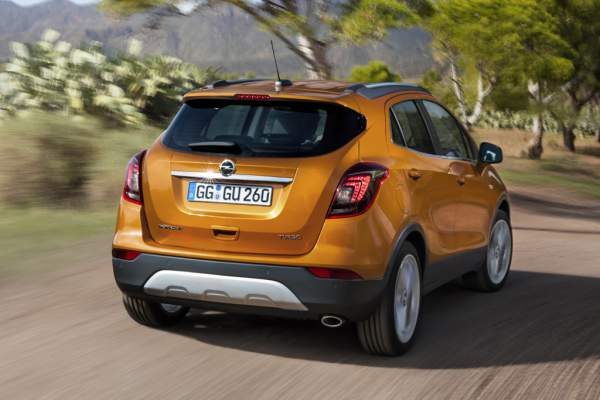
Opel Mokka X compact crossover-update styling

0

Offering 131 mm worth of terrain clearance and a raised driving position that’s taller still,together with artificial scuff plates,front and rear, and all the additional off-road prowess that black-plastic
wheelarch protection affords,the Opel Mokka is a perfect example of what can be achieved from fairly humble starts.

While the vehicle’s dimensions remain unchanged, the most evident update to the exterior
styling is a modified,handsom front-end,incorporating new LED-highlighted head- and foglamp clusters, a fresh family
grille and, ironically, colour coding where the previous model boasted tough-looking black
plastic. Where the Mokka had an 18-inch alloy wheel-size solution,
the new range features 17-inch rubber on entry-level Enjoy spec with high-end Cosmo models now fitted with
19-inch items.mokka-x

The significant change to the revised Mokka range’s interior packaging is an Astra-inspired look.The
previously fussy arrangement of controls and functions for the climate control and audio settings
has made way for an altogether neater and more rational interface.
In entry-level Cosmo specification,this new facia houses Opel’s clever R4.0 IntelliLink touchscreen infotainment system (it’s standard in the Cosmo), although adding satellite navigation is an extra R10 700 on both models.
As before, the presence of logically arranged subsidiary buttons
for audio, telephone and cruise-control functions on the steering
wheel is a advantage.
If there was one gripe about the interior treatment of our particular test unit,it was that the chrome lining around the
instrument cluster reflected unwanted glare both onto the dials and towards the driver’s eye line. Otherwise, perceived fit and finish are commendable.Mokka X
Aimed at younger family buyers, as well as the young at heart,the cabin boasts a welcome array
of storage options, including a deep bin ahead of the gear lever, a part of the facia that is strangely blanked off in the Astra to provide a fixing point for a
number of aftermarket equipment. Where Opel could look to further enhance matters of
storage is by including surfaces that are lined with rubber; as it stands, items placed in these bins
tend to rattle about when the car is on the move.

The impressively punchy 103 kW engine feels and sounds most comfy within the lower reaches of its rev
range; run it towards its 6 500 r/min redline and the unit starts taking strain. Operated
sedately, however, and it’s generally economical – we averaged just
6,9 L/100 km on our mixed-conditions 100 km fuel route.Mokka X opel

While that raised driving position aids excellent all-round visibility, some lankier members of our team felt that the
combination of a tall seating position and previously mentioned relatively narrow body leads to a
top-heavy sensation from behind the wheel. Nevertheless, despite a lack of feedback through the
light steering setup, the Mokka offers a surefooted and composed driving experience that most will find pert rather
than busy.

What the Mokka X does well is embrace its quirkiness and provide something slightly different to
the norm for those buyers who aren’t necessarily looking for family-spec packing space.While not ultimately as refined
in conditions of interior trim as its similarly priced Astra equivalent,the Mokka X nevertheless builds
on an already compelling package that, together with the Adam, nicely complements Opel’s more traditional modern
solutions.

cyl/capac (cm3) 4/1 364
power (kW/r/min) 103/4 900-6 000
torque (N.m/r/min) 200/1 850-4 900
gears/drive 6/F
0-100 km/h (sec) 9,93
max speed (km/h) 191
fuel index (L/100 km) 7,92
luggage capac (dm3) 200/976
serv/maint plan S5/90 000 km

Charge your phone in seconds-prototype looks encouraging

0

Researchers at the University of Central Florida have produced a prototype supercapacitor battery for small devices that
can be charged in seconds, but potentially last all week. It can also be recharged 30,000 times without degrading.what-

Supercapacitors store energy electrostatically on the surface of a material.There are no chemical processes, which
are slow and cause physical damage to the structure of the battery. A supercapacitor can charge and discharge extremely rapidly,because the only moving thing internally is the electrical charge.
Traditionally, supercapacitor tech has been held back by low energy density. To get a usable amount of power meant unfeasibly
large capacitors, limiting previous applications to buses and trains. This is where the new generation of nanomaterials
comes in, making it possible to build huge surface areas into a tiny film of material. The prototype contains millions of nano-meter-thick coated wires to store the static charge.

Before we get too excited, this is still at the proof of concept phase, but building a working prototype looks encouraging. The
Florida team is among many such groups working on new battery technologies, and many use nanotechnolgy in one form or
another. A group based at MIT has developed a new form of anode built from carbon nano-tubes, to boost the effectiveness of
Lithium-ion batteries, which shows promise.
The world has been waiting for a replacement for chemical batteries for years; while everything has got more capable and faster, it has drained batteries all the more rapidly. If nanotechnology capacitors can be made commercially
viable, waiting hours for your car or phone to charge will become a distant memory.

source:maximumpc

Integrated amplifier Cambridge CXA80

0

As the flagship integrated amplifier in Cambridge’s CX range,the CXA80 boasts 80W per channel,a hi-res built-in DAC and an asynchronous USB Type B input. To that it adds three hi-res digital inputs: one coaxial and two optical. A second USB port supports the BT100 Bluetooth dongle (available for £70).
The trade off is no onboard phono stage, but there are four line-level inputs into which you can plug your own plus a pair of balanced XLR inputs and, on the fascia, 3.5mm inputs for personal players and headphones. And,
there are two sets of speaker terminals to easily facilitate bi-wiring.On top, the heat venting also doubles up as a showcase for the smartly dressed toroidal transformer and flanking heat sinks. But pretty as it looks, the symmetrical circuitry
drops a strong hint about the CXA80’s intent, which pushes the performance potential of its dual mono layout a
step further by having separate transformer taps for both the left and right channels.amplifier Cambridge CXA80

In terms of build and finish, it’s hard to see where any corners have been cut. On the contrary, the thick aluminium fascia and smooth,radiused edges are something you expect to find on a far more expensive amp. As an ownership proposition,
the CXA80 looks and feels as desirable as any in the group.

Cambridge says it previously went to almost surgical lengths to minimise distortion in its amplifiers for the best
results and that, invariably, it meant 46 components sat in the signal path.For the CX Series, the company wanted to dramatically cut the component count. As a result, the CXA80 has just 24 components in the signal path. The big difference is that there are 500 support components as well. Their job is to guarantee those 24 key components are optimal
all the time regardless of mains fluctuations and other influences. So where previously tweaking one of the 46 components only made a tiny,hard to quantify, difference to the sound, changing just one of the 24 components in the CXA80 affects the
character of the amplifier, making it possible to hear clearly what each component is doing.cxa80

Power output80W RMS into 8 Ohms, 120W RMS into 4 Ohms-DACWolfson WM8740-Frequency Response<5Hz– 60kHz +/-1dB-Analogue audio inputs1x balanced XLR, 4 x RCA, 1 x 3.5mm MP3 input (front panel)-Digital audio inputs1 x S/PDIF coaxial, 2 x TOSLINK optical, 1 x USB audio, Bluetooth via BT100 (not supplied)-CompatibilityTOSLINK optical, S/PDIF coaxial, USB 1.0 and 2.0, BT100 Bluetooth receiver-OutputsSpeakers A+B, 3.5mm headphone, Preamp Output, Subwoofer Output-Max power consumption750W-Standby power consumption<0.5W-Dimensions (H x W x D)*115 x 430 x 341mm (4.5 x 16.9 x 13.4”)-Weight8.7kg (19.1lbs)

Timing feels fleet and generally secure, but a little more mechanical than some others here. That said,we seriously doubt you’ll find more clarity, drive and capacity to entertain in an integrated amplifier at this price.

Cambridgeaudio

Headphone Amp & DAC-HRT MicroStreamer,for on the go use

0

The HRT MicroStreamer is the excellent solution if you’re searching for a headphone amp & DAC strictly for your personal computer, tablet or smartphone for on the go use. The MicroStreamer has a an easy-to-use interface with simply a USB input, headphone jack, and a fixed-level, low impedance 2.25V line output. The device powers directly from a computer, and despite it’s small sizes, is able to drive most headphones with competence. Volume is controlled by a digital ‘slide’ control on the host pc’s music playback software package.HRT MicroStreamer

The Micro Streamer allows native-resolution playback of music content up to 24-bit/96k and is indicated by the LED indicators on the side of the unit displaying the current sample rate (32k, 44k1, 48k, 88k2 & 96k). HRT’s upstream utility allows the MicroStreamer to be up-to-date right from the computer’s desktop as firmware updates become available. Simply put, this smooth little aluminum box that’s designed and manufactured in California, USA, will leave you with very little to worry about and a whole lot to love.

Apple iOS compatibility needs use of the appropriate lightning or 30-pin Camera Connection Kit on the following devices: iPad (all generations), iPhone4 or newer running iOS7 or iPod touch 5th generation (iOS7).HRT MicroStreamer-1

Features:

compact & portable headphone amp & DAC accepting up to 24/96 material
supports 32k, 44.1k, 48k, 88.2k and 96k sample rates, identified by LED light
plug and play w/ standard 1.0 audio drivers, upstream utility for fast firmware upgrades
asynchronous mode operation eliminates jitter

HRT MicroStreamer specifications:

THD at 1V output: THD+N (1 kHz Full Scale): .002% (line), .008% (headphone)
DAC: yes
Signal-to-Noise Ratio: DC to 30kHz: 18uV RMS; A-weighted: 105 dB
Inputs: USB
Outputs: 1/8 line level, 1/8 headphone jack
Output Impedance: 50 Ohm (line), .5 Ohm (headphone)
Output Power: up to 140mW (headphone).

Canon EOS M5 Camera with APS-C Type CMOS sensor-good choice

0

The Canon EOS M5 is amazingly made with a compact body and ergonomic style and design.The body is primarily
made of poly-carbonate with metal reinforcements wherever required.
The Canon M5 has two control dials on top together with the exposure compensation dial and mode dial.The shutter release
is mounted with a slight slanting for quick access.The camera has a tilting LCD,which exposes the connecting cable even more than other tiltable models.Both the lens mount and tripod receptacle are metal.

The Canon EOS M5 uses a 24.2 megapixel APS-C Type(22.3 x 14.9mm) CMOS sensor, supported by a DIGIC 7 processor.The camera is suitable with Canon EF-M lenses and can accept Canon EF and EF-S lenses with the support
of an EF-EOS M mount adapter.The M5 can record JPEG or Raw images (synchronous recording of Raw and
JPEG possible) at a maximum dimension of 6000 x 4000 pixels.It can shoot
continuously at up to 9 frames per second up to a maximum of 26 JPEG Large/Fine, 17 Raw or 16 Raw+JPEG images.canon m5

The EOS M5 uses Dual pixel CMOS AF with up a total of 49 AF points.It offers One-Shot and Servo AF modes
along with Continuous AF.Metering modes available are Evaluative, Partial,Spot and Centre-weighted average.
Shooting modes include Program (P),Shutter priority (Tv), Aperture priority (Av) and Manual (M).Sensitivity
ranges from ISO 100 to 25,600 along with an Auto option.Exposure can be compensated up to ±3 stops in 1/3-stop increments. Auto Exposure Bracketing can be set for ±2 stops in 1/3-stop increments.Drive modes include Single and Continuous and the
Self-timer mode enables you to set the timer at 2 or 10 seconds.

The camera uses an electronically controlled,focal-plane shutter, which delivers shutter speeds from 30 to
1/4000 sec along with Bulb mode.camera m5

The camera uses a 3.2inch, 1.62 million-dot TFT tilting capacitive touch LCD. Images are recorded on an SD/SDHC/SDXC memory card (UHS-I compatible).The interface includes a Hi-Speed USB and HDMI OUT (Type D) terminals along with a 3.5mm
stereo mini jack. The camera features built-in WiFi, NFC and Bluetooth.The M5 is run by an LP-E17 battery
pack. The camera measures 115.6 x 89.2 x 60.6mm (WxHxD) and weighs around 427g.
Videos were smooth, though the autofocus was not fast enough to our liking.

Canon EOS M5 KEY SPECIFICATIONS
Lens Mount: Canon EF-M
Image Sensor: APS-C Type (22.3 x
14.9mm)CMOS
Effective Pixels: 24.2 million
Recording Media: SD/SDHC/SDXC card
Image type: Still: JPEG, RAW (RAW + JPEG
possible)
Lens Correction: Peripheral illumination,
Chromatic aberration, Diffraction
Autofocus Type: Dual pixel CMOS AF
(1-point AF, face + tracking priority AF)
AF Points: 49 points (Maximum)
Metering Modes: Evaluative, Partial, Spot,
Centre-weighted
Exposure control: Program, Shutter priority,
Aperture priority, Manual
Sensitivity: ISO 100 to 25,600
Shutter Type: Electronically-controlled,
focal-plane shutter
Shutter Speed: 30 to 1/4000 sec.
X-sync: 1/200sec.
Built-in Flash: Guide number 5m (ISO
100/m)
Drive modes: Single, Continuous
Max. continuous speed: Approx. 9.0 shots
per sec
Max. burst: JPEG Large / Fine: Approx. 26
shots; Raw: Approx. 17 shots
Movie Compression: MPEG-4 AVC/H.264
Recording Format: MP4
Best Video Quality: 1920 x 1080 (Full HD),
60p / 50p / 30p / 25p / 24p
Monitor: 3.2inch 1.62 million-dot TFT
colour LCD
NFC: Yes
Wi-Fi: Yes
Power Source: Battery Pack LP-E17 (Supplied)
Dimensions (W x H x D): 115.6 x 89.2 x
60.6mm
Weight: Approx. 427g

source:Canon

Lexus IS Sedan-ergonomic upgrades and suspension tweaks

0

Lexus has released a raft of modifications to its IS sedan collection,which include cosmetic and ergonomic upgrades,as well as a handful of suspension tweaks.The three-model line-up is still unchanged,with the IS200t still
available in two trim levels (E and EX) and the IS350 F Sport retaining its range-topping place.
The visual updates include things like a new interpretation of the brand’s trademark spindle grille,a reshaped bonnet, larger front air intakes and new LED headlamps. Round the back,the LED taillights have also been re-designed and new square chrome-effect exhaust ideas make an appearance.LEXUS IS

Inside,the infotainment display screen has increased in size from seven to 10,3 inches (for the EX and F Sport),and a brand-new,high-resolution monitor has been added to the mix.The drive mode selector for the F Sport improvements
a customize setting and the active cruise control switch has been made easier to one-step activation with a prolonged push of the primary cruise-control button. On the center of the facia,the audio and ventilation control panel has
been modified.
There is new stitching on the top of the instrument binnacle hood, along with graphic changes to the speedometer and tachometer,and the layout of information presented in the central screen has also been better.
As before, the two IS200t models employ a 2,0-litre twin-scroll,turbocharged, four-cylinder engine worth 180 kW and 350 N.m, and it is combined with an eight-speed automatic transmission.The IS350 F Sport, meanwhile,features a
3,5-litre V6 producing 233 kW and 378 N.m.LEXUS IS

A front double wishbone suspension setup boasts a unique forged-aluminium lower arm that,claims Lexus,gives you a 49% increase in rigidity.There’s also a new higher support bush,revised
coil spring rates, new shock absorber components and a revised damper setting up for enhanced cruise comfort.

photo:Lexus

Smartphone BlackBerry DTEK60-21MP camera,screen 5.5″,Fingerprint Sensor…

0

BlackBerry DTEK60 doesn’t look monotonous.In fact,even while its performance have dipped,BlackBerry
itself has come out with some really innovatively made phones (we like- Passport and the Priv).The responsibility of
manufacturing BlackBerry devices now rests with TCL Communications (the company that manufactures Alcatel cell phones)and well,it has absolutely provided a phone that is worth looking at.
No,it does not look radically different from the current Android flagship crowd, but
we like the glass front and back of the DTEK60 and the good metal frame.

The front is all about the 5.5 inch display, with no physical or even touch buttons beneath it.On the right are
the volume button and a customizable key, while on the left are the power-display key as well as the SIM card and
microSD card slots. Right on top is the 3.5 mm audio jack,while on the base,for the first time in a BlackBerry
unit,is a USB-Type C port, flanked by a phone speaker grille.The backside is marked by the BlackBerry logo as
well as the rear camera and another BlackBerry 1st – the fingerprint sensor.

At 153.9 mm, and it is a little bit on the longer side,but then it is an outstanding 7 mm thin, giving it a modern,slim
figure. At 165 g, it feels reassuringly solid to hold. Make no mistake about it, with its
blend of metal and glass,the DTEK60 is an stylish mobile phone.BlackBerry DTEK

And underneath all that elegance lies some really good hardware.The display is a quad HD AMOLED,giving it an
superb pixel density of 534ppi,and powering the device is the chip that is found in almost all
Android flagships of 2016 -the Qualcomm Snapdragon 820 – backed up by 4 GB
RAM.Storage space stands at 32GB, which is expandable to a massive 2 TB using a memory card,and the camera at the
rear is a 21.0-megapixel affair while that in front is a 8.0-megapixel one.The DTEK60 also ticks off all the
connectivity solutions you would expect from a flagship device -4G, GPS, Wi-Fi, Bluetooth and NFC. And it arrives with stereo speakers as well.Running on top of all of this is Android Marshmallow (6.0) with a clearly BlackBerry taste.

On the multi-media entry too,the DTEK60 turns in a interestingly good performance.
The rear camera takes some great pictures in good light conditions and the speakers churn out very fine sound.
The specs and display make this a great device for watching videos and playing games.
Battery life’s a bit low by BlackBerry criteria,though – use it heavily and the 3000 mAh battery will challenge to
see thru a day.

BlackBerry DTEK 60 is absolutely far more affordable than the uber pricey Priv,which was BlackBerry’s first effort at an Android smartphone.But then, the Priv did come with BlackBerry’s well-known keyboard,which was a
deal maker for many of the old BlackBerry’s.The DTEK60 is a really good device in its own right,providing sleek
performance and software that is updated frequently as well as some very good multimedia,but by Android standards,
it is definitely on the more expensive side.For example,
at this price, it is more expensive than the slightly old but still excellent Samsung
Galaxy S7, and is almost 50% more expensive than the lately launched OnePlus
3T, which offers a newer processor,more RAM and a exceptional camera. Yes,we do
think the BlackBerry DTEK60 will strike a chord with the BlackBerry old guard that wants to dip its toes in
Android oceans, but we are not sure it does good enough to take on the current bunch of Android flagships.